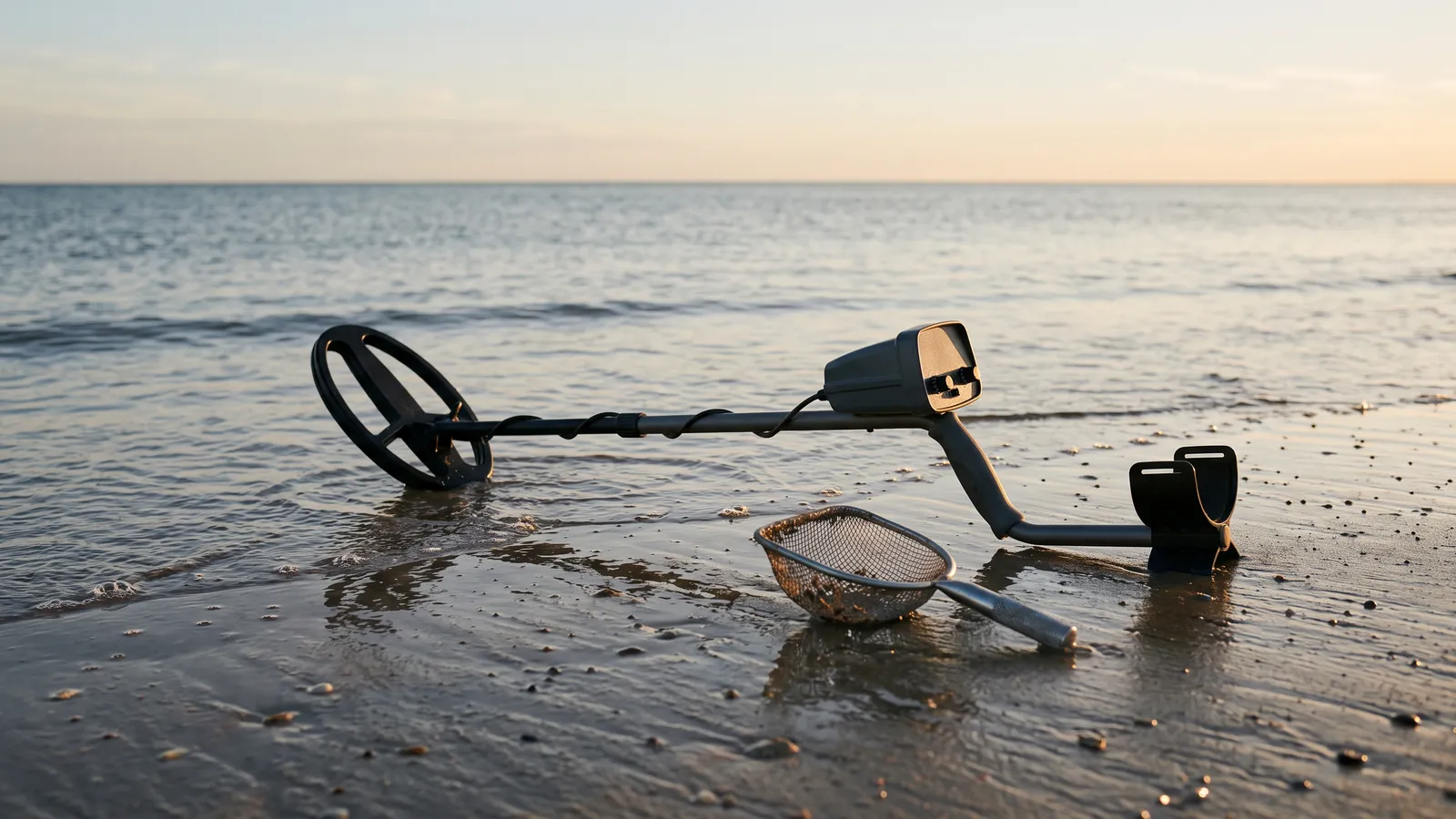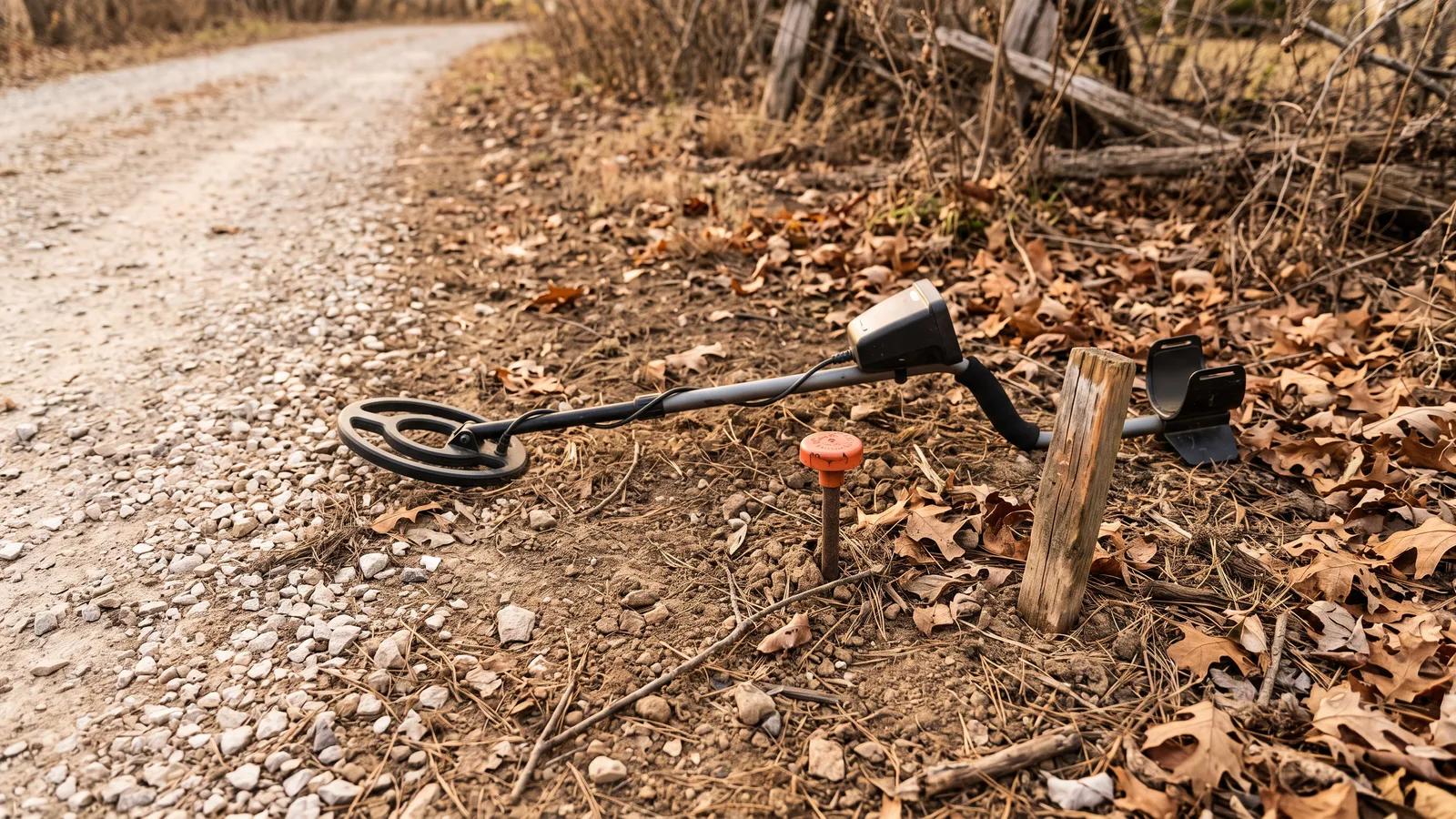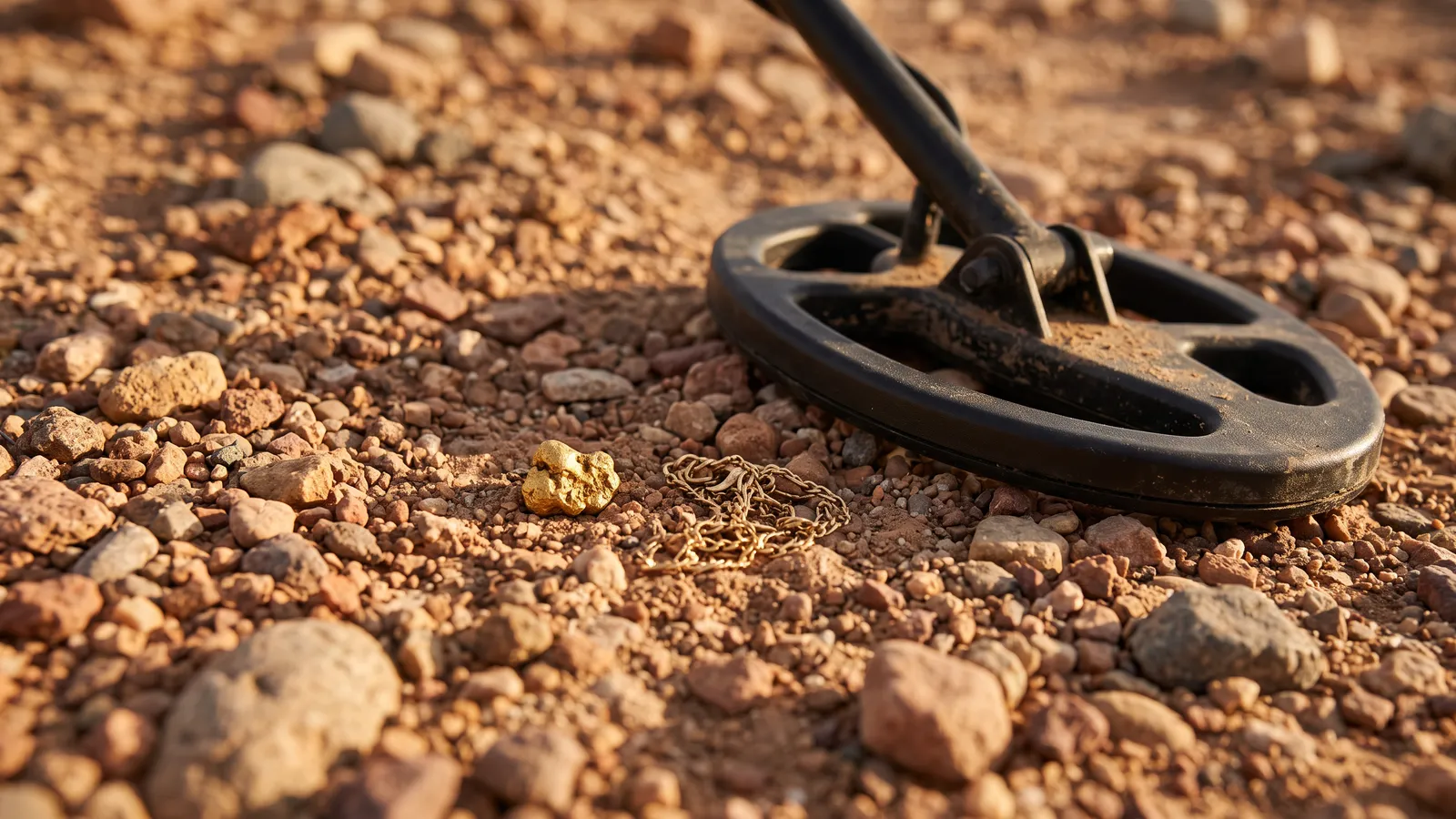
Yes, a metal detector can find gold. The honest answer has two halves, though. A gold ring, a chain or an earring in a park lawn is well within reach of any hobby detector, including the entry-level models on our list. A natural gold nugget, small and buried in iron-rich desert soil, is a different hunt: it usually takes a machine built for it, at a higher frequency or with pulse induction, and a lot of patience.
This guide explains why gold is a hard target, what separates a jewelry hunt from a prospecting trip, which settings matter, and where you are allowed to look. It draws on Garrett's own guides to gold detecting, on federal rules from the BLM and the Forest Service, and on the published specs of the detectors we cover.
Why gold is a tricky target
A detector sends an electromagnetic field into the ground and listens for metal that disturbs it. Big, highly conductive targets, such as a silver coin, answer loudly. Gold is harder. Garrett points out that gold conducts less well than silver or copper, and that it usually turns up in small, low-mass pieces: fine flakes, small nuggets and delicate jewelry. Small plus low conductivity means a weak signal.
The ground makes it worse. Gold country is often heavily mineralized, with iron-rich soil, black sand and "hot rocks" that sound like metal. Garrett notes that ordinary coin detectors tend to chatter in that kind of ground, or miss small gold entirely.
So the question is not really "gold or no gold." It is: how big is the piece, how deep is it, and how noisy is the soil around it?
Gold jewelry: your detector already can
Lost jewelry is the easy case. A ring is a solid, closed loop of metal, usually lost close to the surface in a yard, a park or beach sand, where the soil is mild. Every detector on our list will sense it at those depths.
The real difficulty is identification, not detection. Gold jewelry often reads in the same middle zone of the target ID scale as foil and pull tabs, and thin or small pieces read lower. That is why our guide on how to find a lost ring with a metal detector recommends accepting low and middle signals instead of discriminating them out. Garrett gives the same advice for gold in general: weak or scratchy signals can still be gold, and experienced hunters dig them.
Two practical settings help:
- A jewelry or all-metal mode. The Minelab Vanquish 340 has a dedicated Jewelry mode in Minelab's tech specs; the Garrett ACE 300 and ACE 400 offer five search modes plus pinpoint, according to Garrett. On any detector, an all-metal or no-discrimination setting keeps every signal audible.
- A slow, overlapping swing close to the ground, so a faint signal does not slip between two passes.
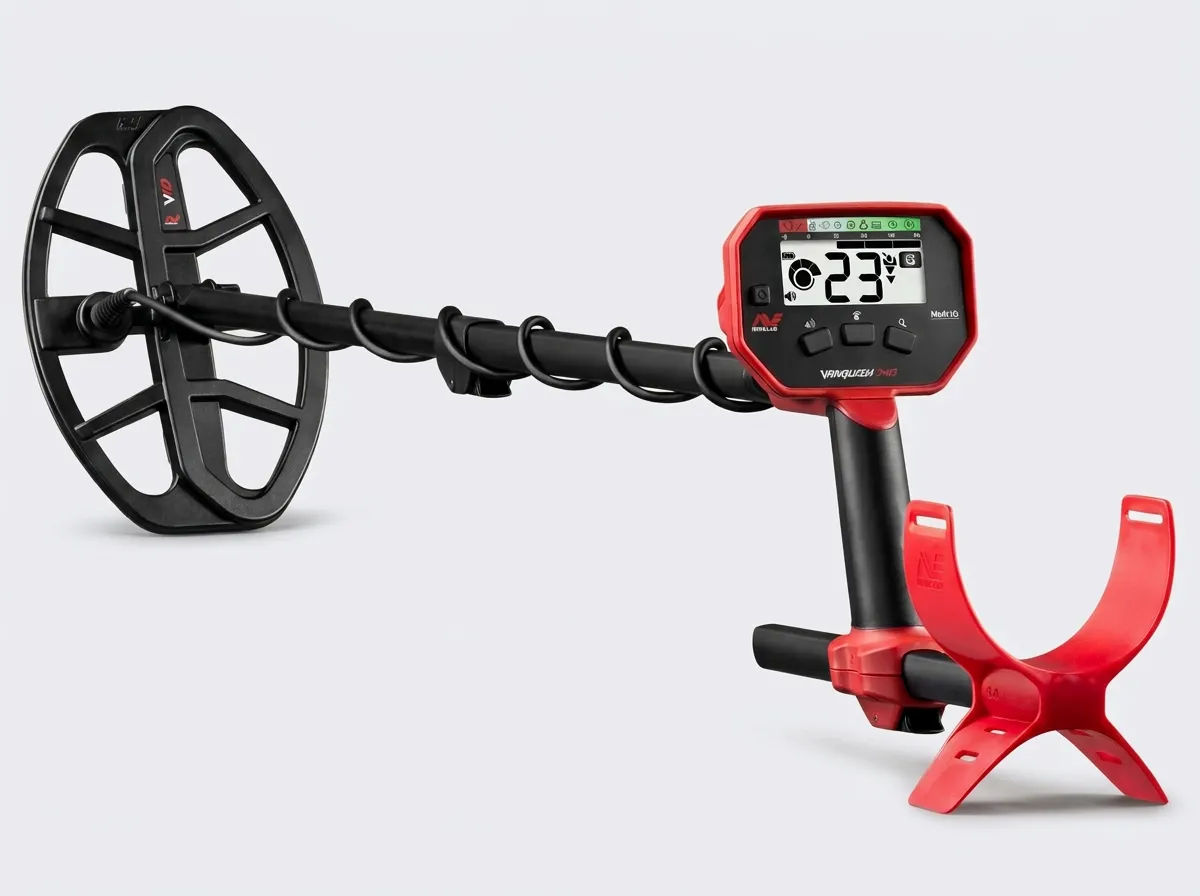
Minelab Vanquish 340
Availability checked on November 11, 2026. Prices change often: the button below shows today’s price and seller offers.
Gold nuggets: where frequency matters
Prospecting for natural gold is where the detector itself makes the difference. Garrett's frequency guide sorts machines this way:
| Detector type | Frequency | What Garrett says it suits | Examples |
|---|---|---|---|
| General purpose VLF | 5 to 15 kHz | Coins and larger targets; not recommended for small gold | Garrett ACE 300 (8 kHz), ACE 400 (10 kHz), Bounty Hunter Land Ranger Pro (7.6 kHz) |
| Mid-high VLF | 15 to 20 kHz | Entry-level prospecting: moderately sized nuggets and gold jewelry | Minelab X-Terra Pro at its 15 kHz setting, on the low edge |
| High-frequency VLF | 40 to 70+ kHz | Fine gold, flakes and tiny nuggets near the surface | Dedicated gold detectors such as the Garrett Goldmaster 24K (48 kHz) |
| Pulse induction (PI) | No fixed frequency | Larger, deeper nuggets in heavily mineralized ground | Dedicated machines such as the Garrett Axiom |
Two trade-offs run through that table. Higher frequencies are more sensitive to small gold, but they do not reach as deep and they react more to mineralized ground, so ground balance becomes essential. Pulse induction handles hot ground and depth best, but Garrett says it is less effective on tiny, near-surface gold and offers limited discrimination, so you dig more trash.
What this means for the detectors we cover: none of them is a dedicated gold machine. The Minelab X-Terra Pro comes closest. Its 15 kHz option, manual and tracking ground balance and large Double-D coil make it a reasonable tool for a first try in mild gold-bearing ground, and its full submersion helps in creeks. The ACE models and the Bounty Hunters sit in Garrett's general-purpose range. They can sense a large nugget in mild soil, but small gold in hot ground is not what they were designed for.
Garrett is also candid about cost: its buying guide says detectors built for serious gold hunting sit a clear step above entry-level VLF models. If nugget hunting is your main goal, plan for a dedicated detector rather than a park model.
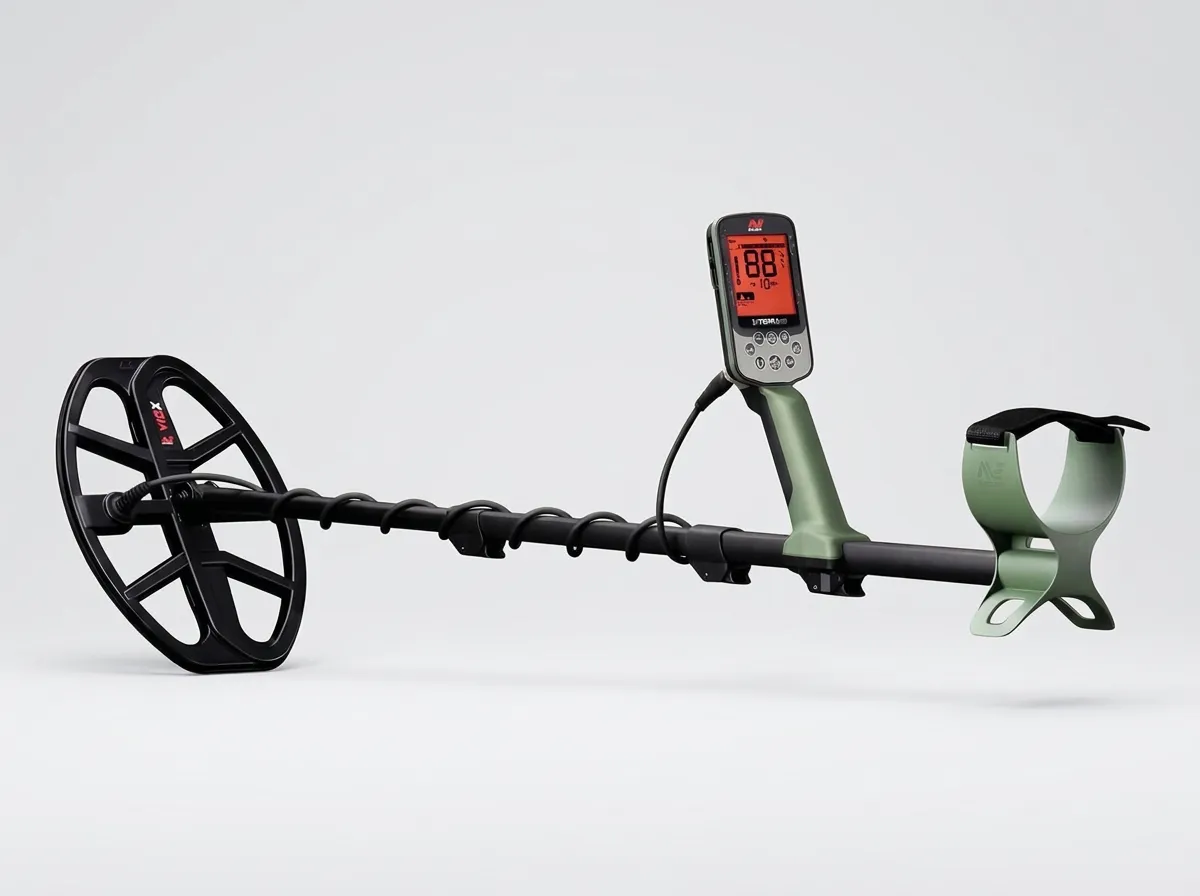
Minelab X-Terra Pro
Availability checked on November 11, 2026. Prices change often: the button below shows today’s price and seller offers.
The settings that matter for gold
Whatever the detector, the same habits come up in Garrett's guides:
- Ground balance first. Balance to the soil before you start, and again when the ground changes. Automatic ground balance is the easy start; manual and tracking modes give more control in goldfields where soil shifts quickly.
- Keep discrimination low or off in remote goldfields. You will dig more iron, but you will not reject a small or oddly shaped nugget that gives an iffy tone.
- Pick the coil for the job. A small coil is more sensitive to small gold and easier to work between rocks and trash. A larger coil covers ground faster and reaches deeper for larger nuggets.
- Sweep slowly and low. Small gold gives a short, faint signal. Lifting the coil a few inches costs more than you think.
- Use headphones. The faint edge of a signal is often the gold one.
Our metal detector basics guide explains frequency, ground balance and coil types in more depth.
Where you may look for gold
Finding gold is one question; keeping it is another. A few rules shape every gold hunt in the United States:
- BLM land. The Bureau of Land Management's "Can I Keep This?" guide allows prospecting with hand tools, metal detectors included, when it causes no more than minor surface disturbance. Reasonable amounts of minerals, gold included, may be collected for personal use, not for sale. Collecting on an existing mining claim requires the claimholder's permission, and developed sites such as campgrounds are off-limits unless permitted.
- National forests. Prospecting for gold falls under mining rules. Activity that disturbs the surface requires a Notice of Intent under 36 CFR 228 Subpart A, filed with the local district.
- National parks. Possessing or using a metal detector is prohibited in National Park Service areas under 36 CFR 2.1(a)(7).
- Private land. You need the owner's permission, always.
Popular gold areas can be covered by active mining claims, so check with the local BLM office before you dig. Our guide to where you can legally metal detect covers each type of land in more detail. For anything beyond casual prospecting, ask the land office directly; this guide is not legal advice.
Which detector for which gold
| Your goal | What you need | Good fits |
|---|---|---|
| A lost gold ring in the yard, park or beach | Any hobby detector, an all-metal or jewelry mode, patience with mid-range signals | Garrett ACE 300, Minelab Vanquish 340 |
| Gold jewelry on beaches, wet sand included | Multi-frequency or a fully waterproof detector | Minelab Vanquish 360, Minelab X-Terra Pro |
| A first try at nuggets in mild ground and creeks | A higher frequency option and manual ground balance | Minelab X-Terra Pro (15 kHz) |
| Fine gold and small nuggets in mineralized ground | A dedicated high-frequency VLF gold detector | Outside our list |
| Larger, deeper nuggets in hot ground | A pulse induction gold detector | Outside our list |
For the full field of detectors and how they compare on coins, relics and beaches, see our best metal detector comparison.
Frequently asked questions
It can find gold jewelry at shallow depths, and in mild soil it can sense a large nugget. Garrett says entry-level VLF detectors can find larger nuggets in soil that is not heavily mineralized, but that they miss small gold, especially in mineralized ground. For fine gold, a dedicated high-frequency or pulse induction detector is the realistic tool.

Our guides rely on published sources: studies, official bodies, hobby clubs and manufacturer documentation.
- Garrett: Detector Frequency for Gold: The Complete Guide to Finding the Right kHz (Steve Moore, March 2026, updated November 2026)
- Garrett: Best Metal Detector for Gold: How to Choose the Right One for You (Tom Townsend, January 2026)
- Bureau of Land Management: Can I Keep This? (rockhounding and prospecting on public lands)
- USDA Forest Service: 36 CFR 228 Subpart A (Notice of Intent for mineral operations)
- National Park Service: 36 CFR 2.1(a)(7), eCFR
- Manufacturer specs for the Garrett ACE 300 and ACE 400, Minelab X-Terra Pro and Vanquish 340, and Bounty Hunter Land Ranger Pro, as recorded in our product sheets