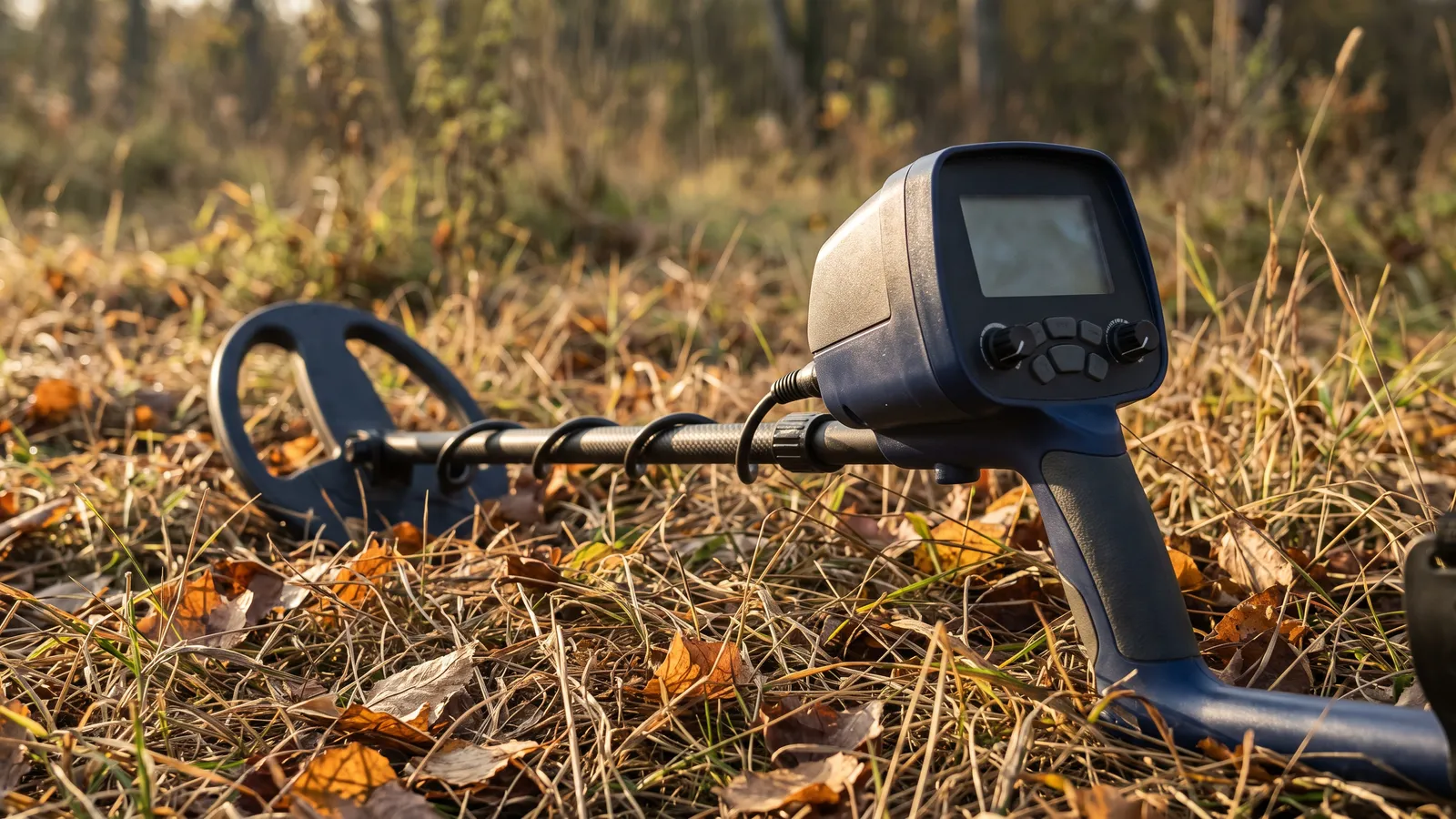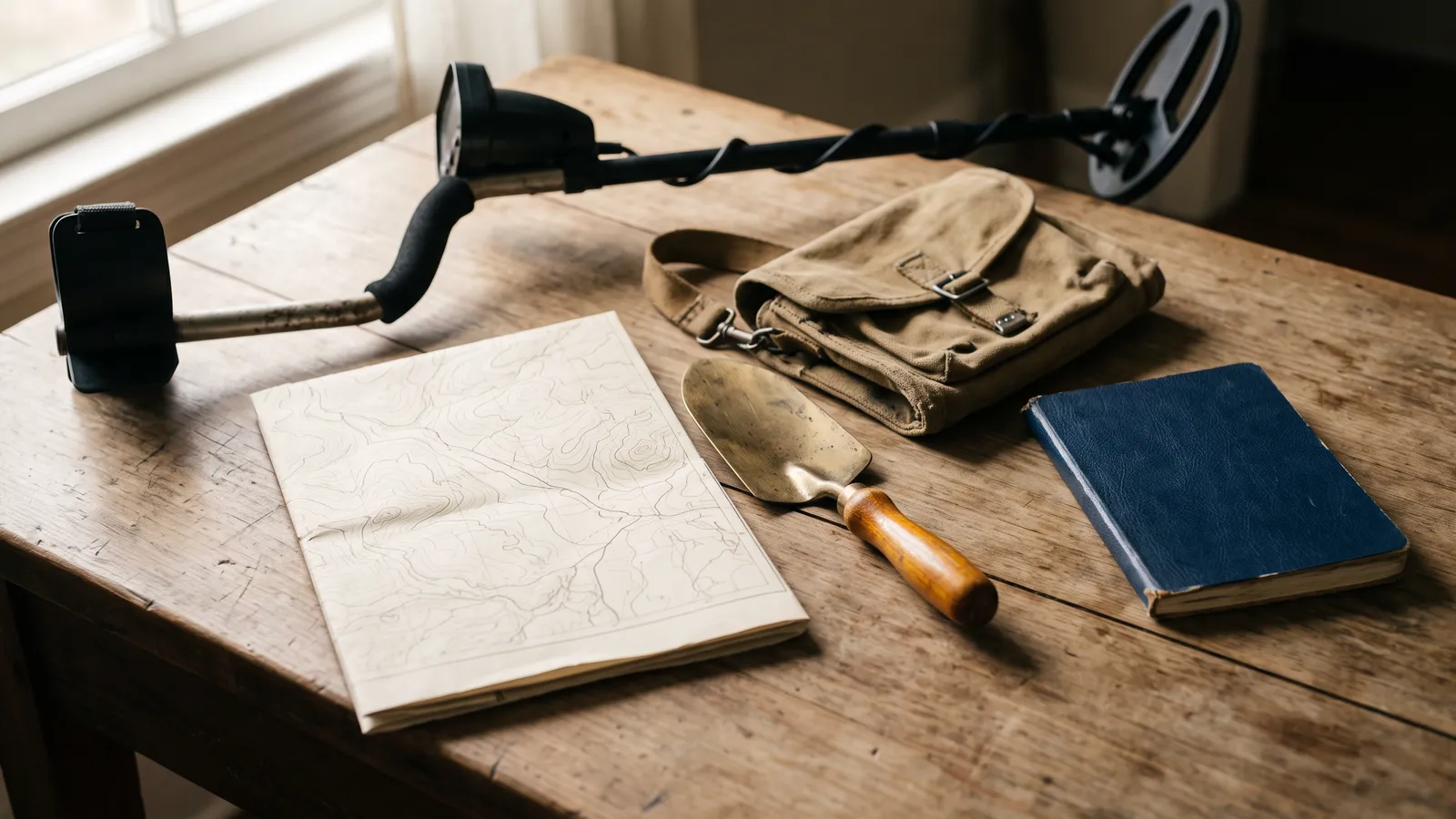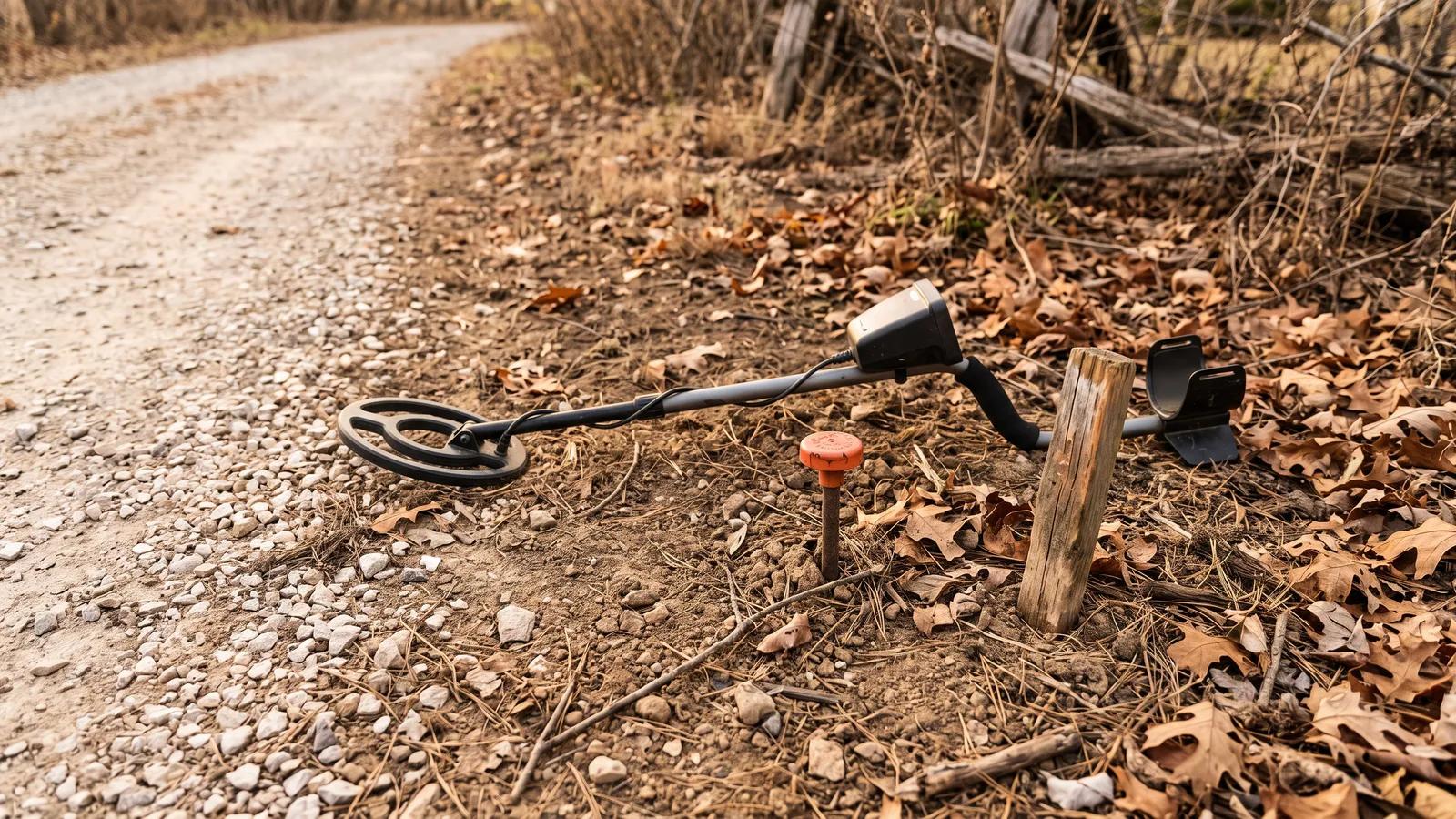
A metal detector for property pins does not need to be fancy: a survey pin is a long piece of iron, and almost any hobby detector will sound off over it if you set it right and search in the right spot. The hard part is everything around the beep: where to look, how deep to expect it, and what you may do once you find it. Here is the method, with the official sources behind it.
Important: this is general information, not legal advice. Survey and boundary laws differ from state to state, and a marker you find is not proof of where your property line runs. For a fence, a sale or a disagreement with a neighbor, hire a licensed land surveyor and, for legal questions, ask a real estate attorney.
What property pins look like, and how deep they are buried
Property pins, also called survey markers or monuments, are set by a surveyor at lot corners and at points where a boundary changes direction. They come in a few common forms.

| Type | What you will see | Where it is common |
|---|---|---|
| Iron pipe or rod | A plain pipe or bar driven into the ground, often rusty | Older city lots |
| Rebar with a cap | A steel bar topped by a plastic or metal cap stamped with the surveyor's license number | Newer surveys |
| Metal disk or tag | A brass or aluminum disk, sometimes set in concrete or pavement | Sidewalks, curbs, paved areas |
| Concrete, stone or cast monument | A post or block, sometimes with a metal cap | Section corners and rural land |
The Minnesota Society of Professional Surveyors, in a FAQ published by Hubbard County, describes the most common city-lot marker as an iron pipe or rod. Newer ones carry a cap or disk with the surveyor's license number, preceded by "LS", "PLS" or "RLS". Local standards vary: Monterey County, California, calls for a galvanized iron pipe at least 3/4 in across and 21 in long, or #5 rebar with a stamped cap, for monuments set in earth.
How deep? Pins are meant to sit level with the ground. The same FAQ says a few inches of dirt and sod can cover them over the years, and later grading can bury them deeper or remove them. The City of Altoona, Iowa, describes pins as iron bars two to three feet long, just under the surface or up to a foot below. That is within reach of a hobby detector, because the pin is long and made of iron.
Start with paper: the plat, the survey and county records
A detector only helps if you search the right few square feet. Before you swing anything, gather three things.
- Your legal description. It is on your deed, title policy or, in short form, your property tax bill.
- The plat or survey drawing. A description like "Lot 7, Block 3, Jones Addition" points to a recorded plat, available from the County Recorder or County Surveyor. An old survey drawing is even better, because it shows the house.
- A known corner. A pin you can already see, a neighbor's marked corner, or a fixed reference on the drawing.
Then measure. Altoona's guidance offers a few tricks: the road usually sits in the middle of the right-of-way, so half its width from the centerline gives the approximate front line; in newer subdivisions, pins are often within a foot of the sidewalk on the house side; and sidewalk joints sometimes line up with lot lines. Measure the plat's lot width from a known corner to estimate where the next pin should be. Two cautions from the same source: fences are not reliable guides, and a pin that does not match the plat dimensions may have been moved.
How to find property pins with a metal detector
Once you have a target area, the search is short. Before you dig even a few inches, contact 811 (more on that below).
- Use an all-metal or zero-discrimination mode. A pin is iron, and discrimination exists to silence iron trash, so a coin mode can ignore the very thing you want. Pick All Metal on a Bounty Hunter or Zero-Disc on a Garrett ACE 200, for example. Our metal detector basics guide explains discrimination and target ID.
- Start with a moderate sensitivity. If the detector chatters near the house, a metal fence or a driveway, turn it down a notch.
- Grid the area. Sweep slowly, coil flat and just above the grass, overlapping each pass, over a square a few feet wide around your measured spot. Altoona suggests starting about a foot inside the sidewalk toward the house.
- Pinpoint before you dig. Use pinpoint mode if your detector has one, or cross the spot from two directions to find where the signal peaks.
- Read the signal. With numeric target ID, a pin should read in the iron range. A signal that keeps going in a line is more likely a buried pipe, cable or wire: leave it alone.
- Expose, don't extract. Dig with a hand trowel just until you see the top of the pin or cap. Do not pull, bend or straighten it.
- Mark it for the future. The surveyors' FAQ suggests measuring from nearby objects, or setting a brick or flat stone next to the marker, level with the ground, without disturbing it.
Metal detector or magnetic locator?
To be clear about it: the professional tool for this job is not a hobby metal detector but a magnetic locator, sometimes called a pin finder. According to Engineer Supply, a retailer of surveying equipment, a magnetic locator responds only to iron and steel, and most of its users are looking for property corners made of rebar and pipe. The same source says a metal detector typically finds objects around 6 to 10 inches down, while a magnetic locator reaches further on large iron objects, and that locators cost more and are mostly bought by professionals.
What that means for a homeowner:
- A metal detector is fine when the pin should be near the surface and you know roughly where to look. It also finds brass disks, which a magnetic locator cannot.
- A magnetic locator is better when grading has buried a pin deep, on a large rural parcel, or after a detector has come up empty.
- A surveyor is the answer when the pin is missing or moved, or when the location matters for a fence, an addition or a dispute.
The best metal detector for property pins: what to look for in our catalogue
For this job you need three things: an all-metal mode, ideally a pinpoint function, and a coil big enough to cover ground quickly. You do not need multi-frequency or a waterproof control box. These models from our best metal detectors page fit, based on the manufacturers' published specs.
Bounty Hunter Tracker IV. The simplest option. First Texas lists an All Metal mode and an 8 in coil, and says larger objects can be detected over a foot deep, especially in All Metal. There is no pinpoint function, so you cross the spot from two directions. Fine for a one-time search on a small lot. Read the Tracker IV review.
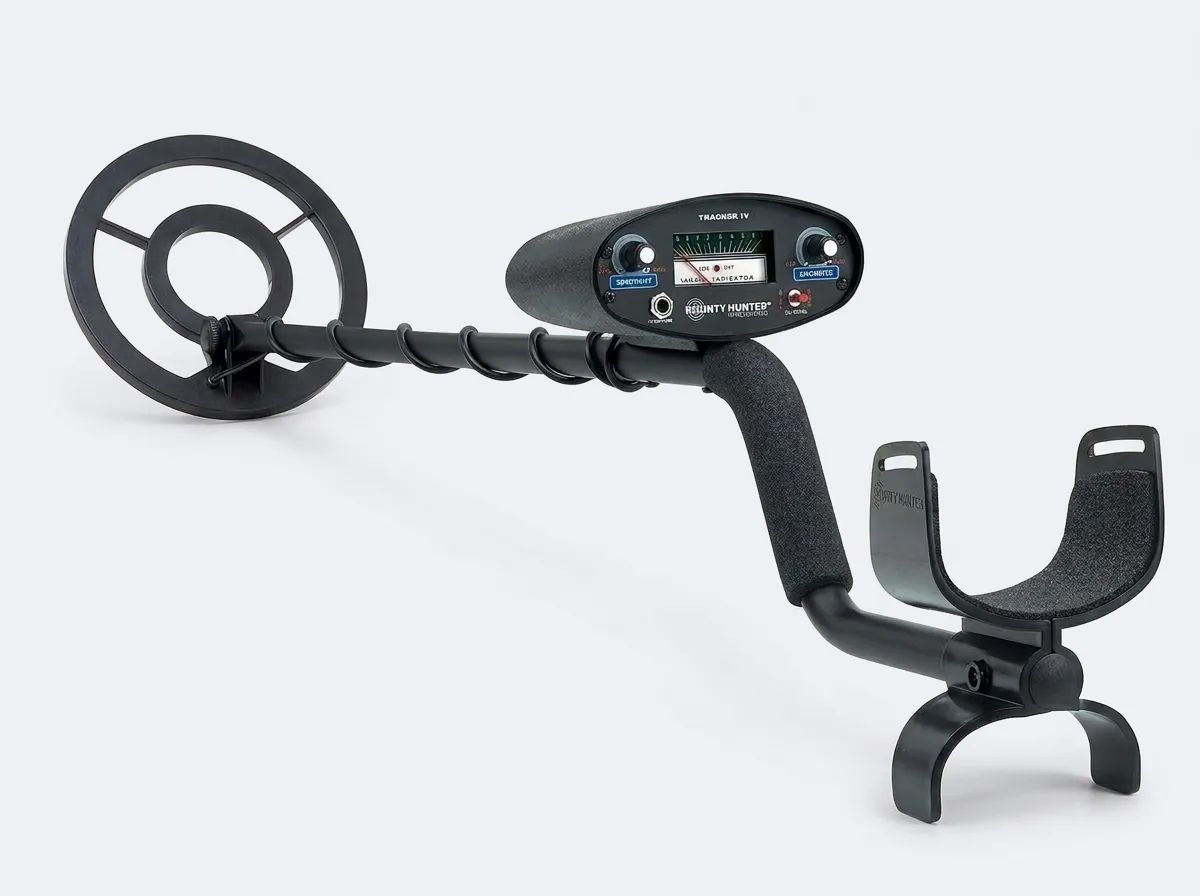
Bounty Hunter Tracker IV
Availability checked on November 11, 2026. Prices change often: the button below shows today’s price and seller offers.
Garrett ACE 200 and ACE 300. Garrett lists a Zero-Disc mode on the ACE 200 that rejects no metals, plus pinpoint. The ACE 300 doubles the sensitivity levels to eight and has a non-motion all-metal pinpoint mode to locate a target's exact position. Both have a 0–99 target ID that helps tell an iron pin from a coin or foil. The ACE 300 makes more sense if you will keep detecting afterward. See the ACE 300 review and the Garrett lineup.
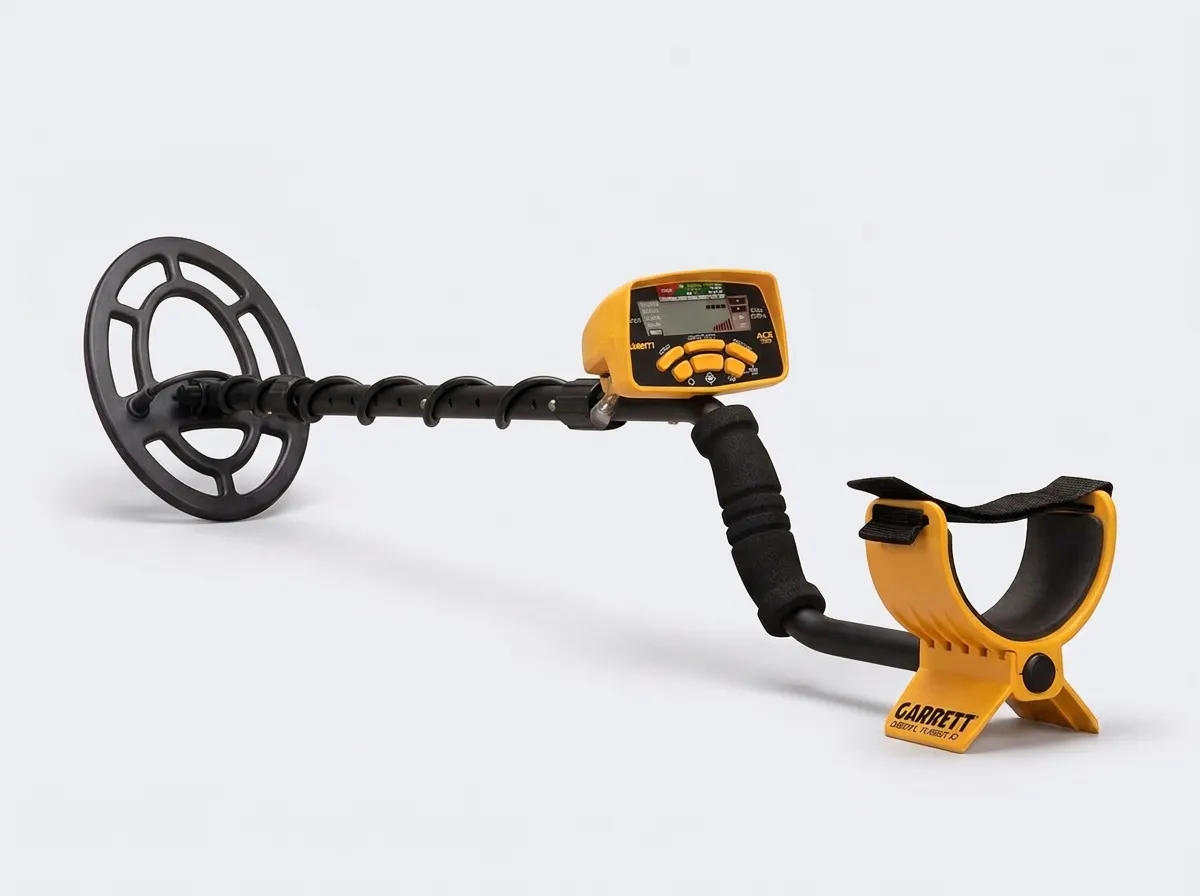
Garrett ACE 300
Availability checked on November 11, 2026. Prices change often: the button below shows today’s price and seller offers.
Bounty Hunter Land Ranger Pro. The best fit for larger or rural lots. First Texas lists an All Metal mode, pinpoint, an 11 in Double-D coil and both automatic and manual ground balance, which helps in mineralized soil. The bigger coil covers more ground per sweep. A few owners report pinpoint glitches, so confirm by crossing the target. Read the Land Ranger Pro review or compare the Bounty Hunter models.
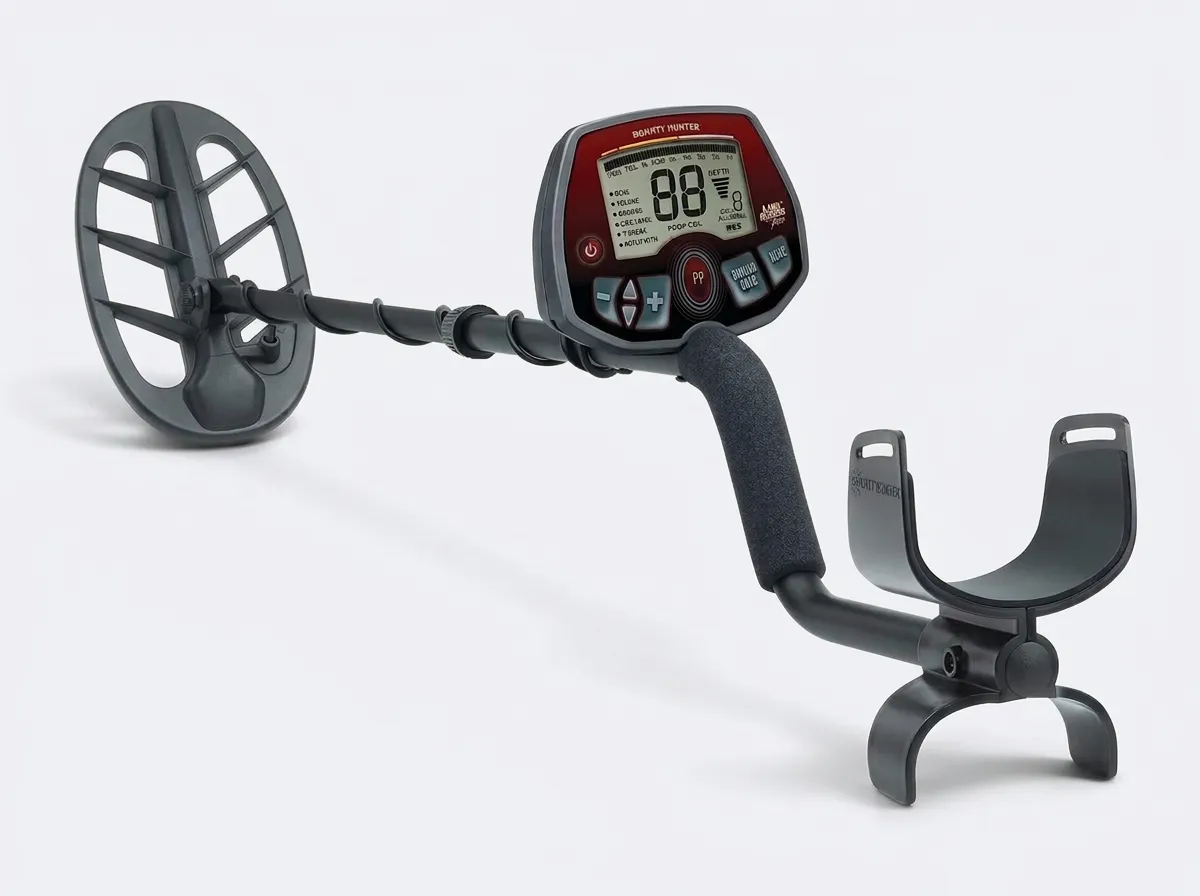
Bounty Hunter Land Ranger Pro
Availability checked on November 11, 2026. Prices change often: the button below shows today’s price and seller offers.
Found a pin? The legal line not to cross
Do not move, remove or "fix" it
Survey monuments are protected by law in many states. A few examples from official state sources:
- New Hampshire (RSA 472:6): knowingly defacing, altering the location of, or removing a boundary monument is a misdemeanor, unless the move follows an agreement between all affected landowners, an official authorization, a court order or a law.
- Kentucky (KRS 433.770): fraudulently and willfully removing or destroying a boundary monument is a Class D felony. Even without criminal intent, the person who removes one must pay to have it reestablished by a professional land surveyor.
- Idaho (Code 54-1234): willfully defacing, injuring or removing a monument set by a professional land surveyor carries a forfeiture for each offense, plus liability for the damages caused.
Federal law (18 U.S.C. 1858) separately covers government survey corners and monuments. The Minnesota surveyors' FAQ also warns that a marker dug up and put back by a contractor is most likely out of position by a few inches to several feet, and should be reset by a surveyor.
Call 811 before you dig
Digging for a pin is digging. The national 811 service asks anyone who plans to dig to contact 811 or their state 811 center a few business days ahead, so utilities can mark buried lines. Some utilities sit just inches below the surface, so shallow digging counts too.
A pin is evidence, not a boundary ruling
A pin tells you where a marker is today, not necessarily where the line is. Altoona warns that owners, utility crews or neighbors sometimes dig pins up and reinsert them nearby, and that the property line does not move with them. The Minnesota surveyors add that two licensed surveyors can, in good faith, disagree where records conflict. For a fence, a sale or a disagreement, hire a licensed land surveyor. To use your detector elsewhere, see our guide on where you can legally metal detect.
Frequently asked questions
Most are iron pipes or steel rods driven into the ground. Newer ones have a plastic or metal cap stamped with the surveyor's license number. Rural section corners may be concrete, stone or cast metal monuments.

Our guides rely on published sources: studies, official bodies, hobby clubs and manufacturer documentation.
- Hubbard County, MN: Survey Department FAQ (Minnesota Society of Professional Surveyors)
- City of Altoona, Iowa: Tips for Locating Property Pins
- County of Monterey, CA: County Surveyor monument standards
- New Hampshire RSA 472:6, Removing or Altering Boundary Markers
- Kentucky KRS 433.770, Willfully removing or damaging boundary marker
- Idaho Code 54-1234, Monumentation: penalty and liability for defacing
- 18 U.S.C. 1858, Survey marks destroyed or removed
- Call 811 / Common Ground Alliance: How does 811 work?
- Engineer Supply: Magnetic Locator vs. Metal Detector
- Garrett: ACE 200 and ACE 300 product pages
- First Texas Products: Bounty Hunter Tracker IV and Land Ranger Pro product pages