A lost ring is one of the few emergencies a metal detector handles well. Most rings that slip off in a yard, in the snow or on the beach stay within a few inches of the surface, as Garrett points out, and a ring is a solid piece of metal that any hobby detector can sense. What usually decides the outcome is not the machine but the method: where you search, how fast you start, and which signals you agree to dig. Here is how to run the search calmly, step by step, and when to hand it over to a specialist.
First, narrow the search area and act fast
Before you switch anything on, retrace what you did with that hand: pulling gloves off, throwing a ball, raking leaves, shoveling, applying sunscreen, rinsing your hands. Garrett notes that rings often come off when fingers shrink in cold or wet conditions, and that many are found some distance from where their owner thought they fell. So mark your best guess, then draw a wider zone around it.
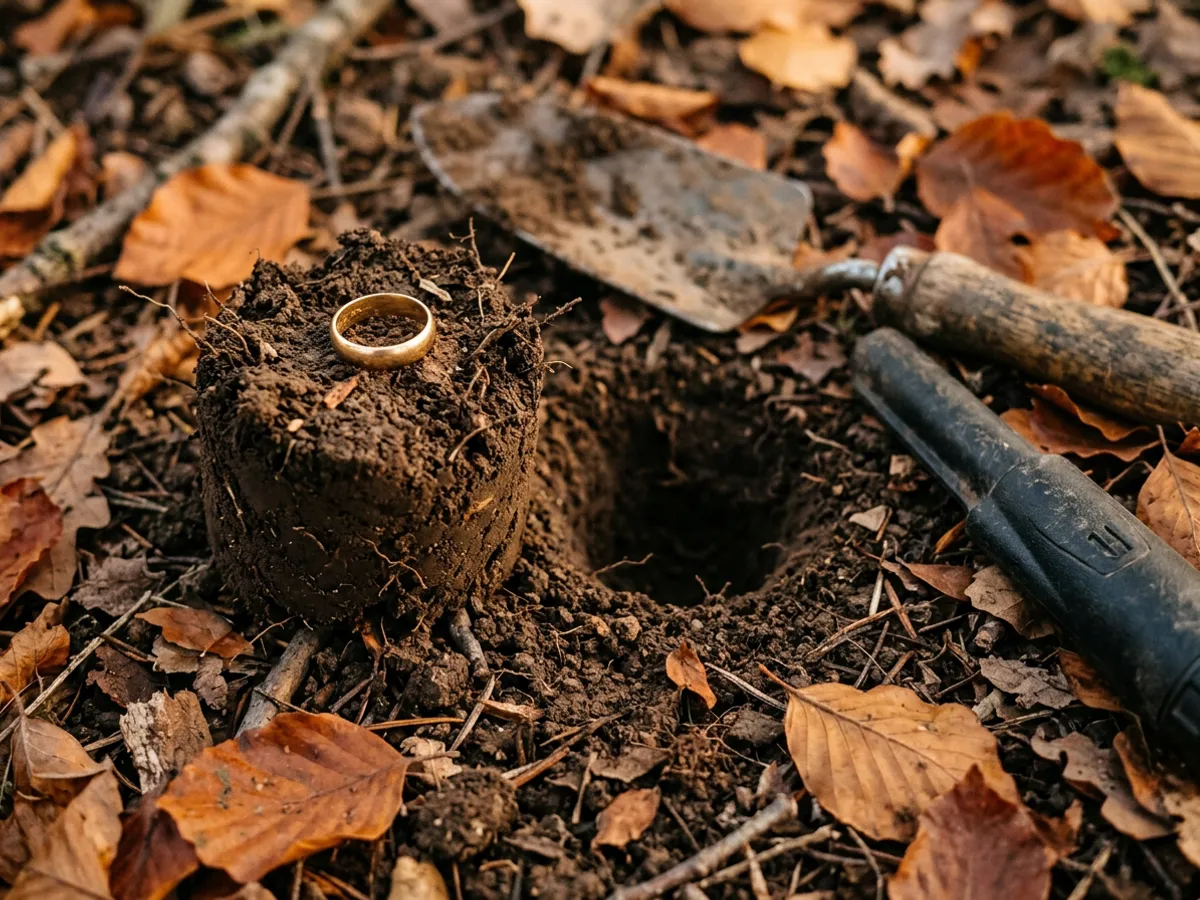
Then protect that zone. Time works against you, in different ways depending on the ground:
- Lawn: stop mowing, edging and aerating until the ring is found. A mower can damage a ring or throw it well outside the area.
- Snow: do not shovel, plow or snowblow the area again. Every pass moves snow, and the ring with it.
- Beach: go back as soon as you can. The Ring Finders, a directory of independent metal detecting specialists, stresses that beach and public-area searches are time critical. Tides, foot traffic and beach raking keep moving the sand.
- Public places: a park or public beach may have its own rules on digging. Our guide on where you can legally metal detect explains what to check; a call to the parks department is a good start.
If you have a similar ring at home in the same metal, bring it. Garrett and Serious Detecting, a US detector retailer, both suggest sweeping a known test piece first, to learn its tone and ID on your own soil.
Metal detector settings for a lost ring
This is where most ring searches go wrong. Many beginners switch on a coin mode or raise the discrimination to skip trash, and silence the very ring they are looking for.
The reason is target ID. As our metal detector basics guide explains, a detector estimates what a target is from how well it conducts. Garrett writes that many gold rings read in the mid-range, overlapping pull tabs and foil. Serious Detecting's target ID chart goes further: on every brand it lists, small gold rings read near foil, larger ones overlap pull tabs almost completely, and no number separates the two. The Garrett ACE 300 manual confirms it in practice: its Coins mode rejects foil and pull tabs, and may miss medium-sized jewelry.
| Ring metal | How it tends to read | What to do |
|---|---|---|
| Gold (yellow, white or rose) | Mid-range, among foil and pull tabs; small, thin bands read lower, near foil | Accept the low and middle of the scale and dig those tones |
| Platinum | Varies with the alloy and size, according to Garrett | Treat it like gold |
| Silver | Higher on the scale, near silver coins, according to Garrett | Easier to pick out, but keep discrimination to iron only |
| Tungsten carbide | Weak signal, mid-range or low, that Garrett says can sound like aluminum, lead or even iron | Lower the discrimination and dig questionable signals just above iron |
| Titanium | Poor conductor, not magnetic; Serious Detecting says hobby detectors read it as a low-to-mid target, near small gold or foil | Search close and slow, and dig faint low tones |
Sources differ on titanium: Garrett's security division calls pure titanium hard for standard detectors to pick up, but that page is about airport screening. For hobby detectors, Serious Detecting says it is detectable at close range, just harder to find than steel or aluminum. Either way, expect a faint signal.
In practice, for a ring search:
- Choose an all-metal or jewelry mode. On the Garrett ACE 300, that means Jewelry or Zero mode, not Coins. The Minelab Vanquish 340 has Jewelry and All Metal modes, according to Minelab's tech specs. On the Bounty Hunter Time Ranger, use All Metal.
- Reject iron at most. Leave foil and pull tabs accepted. You will dig more trash, and that is the price of finding the ring.
- Set sensitivity sensibly. Garrett suggests lowering it in trash-heavy places, where too many signals hide a faint one.
- Think about the coil. According to Minelab's FAQ, smaller coils are more sensitive to small targets, while larger coils reach deeper. A thin band in a trashy yard favors a smaller coil, or at least a slower sweep.
The search, step by step
Garrett's ring-recovery method comes down to a grid, a slow sweep and careful digging:
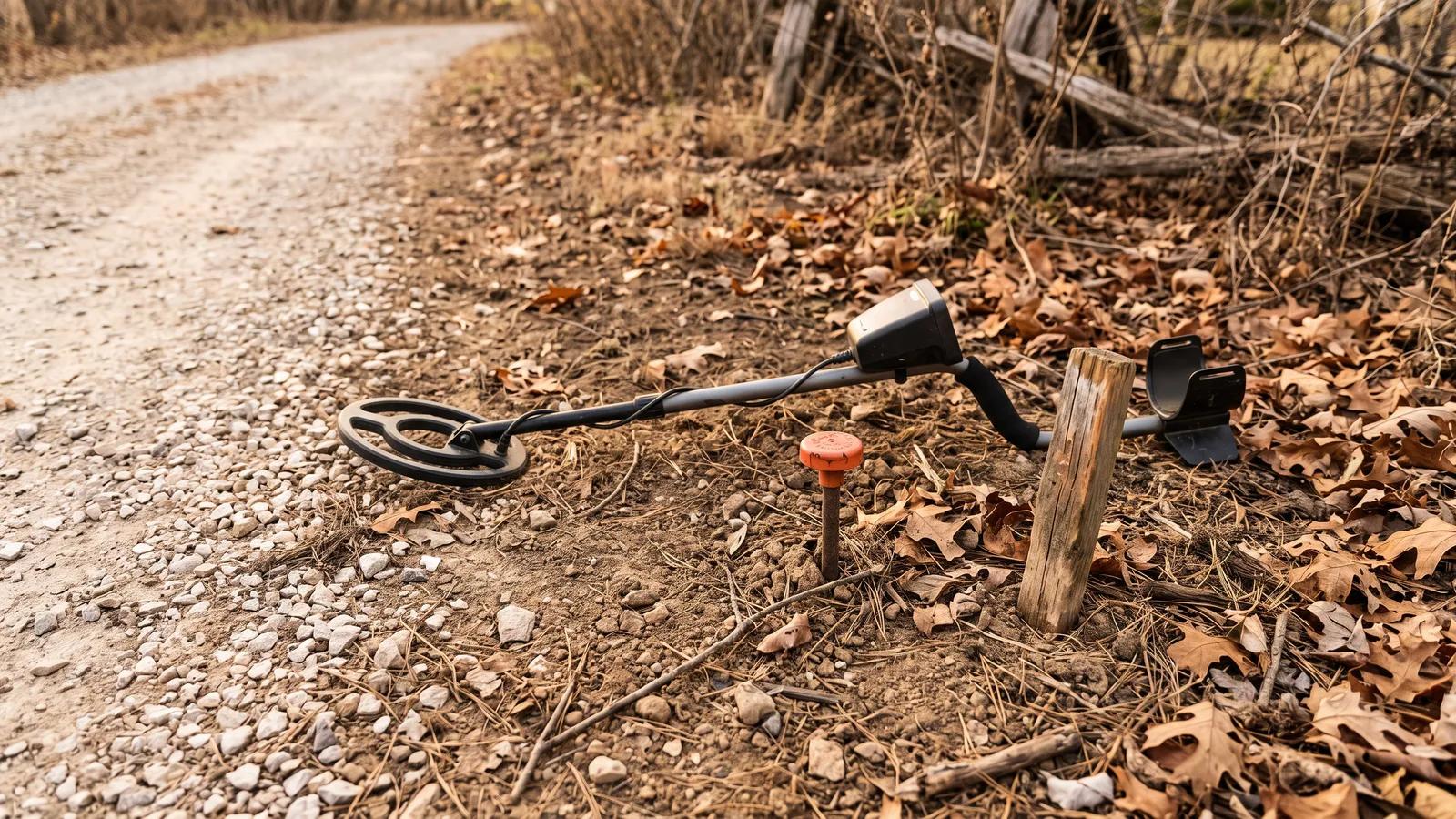
- Mark the grid. Use string, stakes, flags or even shoes to box in the area. Work in lanes about as wide as your coil.
- Sweep low and slow. Keep the coil level and just above the surface, without scraping. Fast sweeps reduce the detector's ability to process weak signals, which is exactly what a small ring gives.
- Overlap every pass. Move forward by about half a coil width so no strip goes unchecked.
- Cross the grid. Once you finish, sweep the whole area again at a right angle. Garrett notes that a round ring can respond differently depending on sweep direction.
- Investigate repeatable mid-range signals. If a signal comes back in the same place from two directions, dig it, even if the ID looks like trash.
- Pinpoint before digging. Use the detector's pinpoint mode or a handheld pinpointer to center the target, which means smaller holes and less risk of nicking the ring.
- Check the hole and the plug. A ring often ends up in the loose soil you just lifted. Sweep both the hole and the plug or pile before deciding the target was elsewhere, then refill the hole neatly.
Keep each trash find in a pocket or pouch rather than back on the ground, so you do not dig the same pull tab twice.
Yard, snow, beach or indoors: adapt the search
Yard and lawn
A recently lost ring usually sits at the base of the grass, sometimes caught in thatch rather than soil. Before you dig, part the grass and look with a flashlight held low, which makes metal glint. Cut neat, hinged plugs with a hand tool so the lawn recovers. Yards hide nails, wire, foil and old pull tabs, so expect false alarms: they are normal, not a sign the ring is gone.
Snow
Snow does not block a detector's signal, but every inch of it adds distance between the coil and the ground. Start by sweeping the snow surface itself, where the ring may simply be sitting. If the area was shoveled or blown, search the piles and the places where the snow landed, not just the path. If the snow is deep and the search fails, stake the spot and come back as soon as it melts.
Beach: dry sand vs wet sand
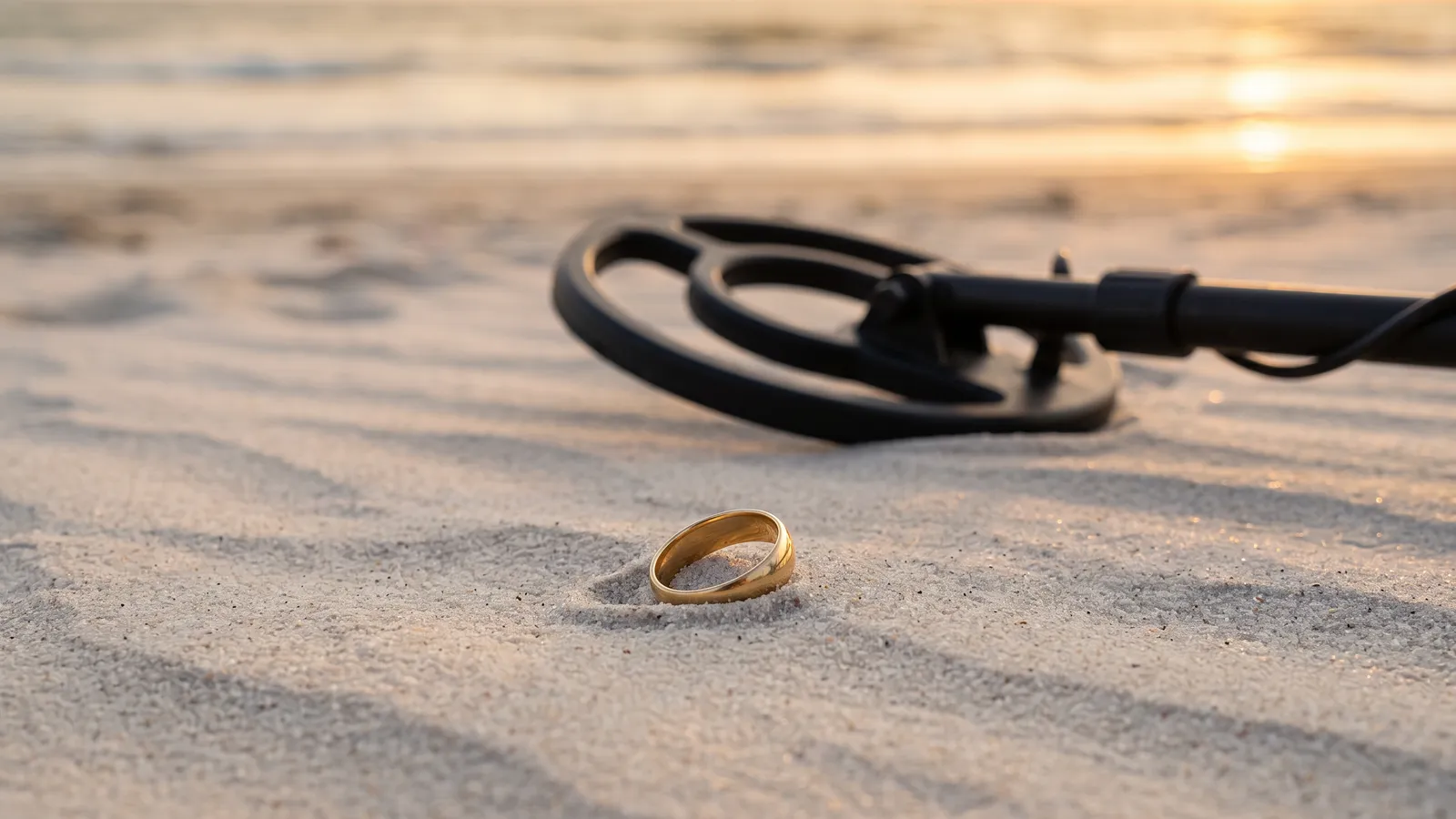
Garrett divides the beach into three zones. Dry sand is the most stable and the easiest to search, and a sand scoop speeds up recovery. Wet sand exposed at low tide is harder, because salt water and mineralization cause false signals on many detectors. The waterline and shallow water need waterproof gear. Low tide exposes the most ground, so time your search for it. For wet sand, a simultaneous multi-frequency detector with a beach mode is the safer choice. The Garrett ACE 300's coil is waterproof, but its control box must stay dry.
Indoors
A ground detector is a poor tool inside a house: nails, wiring, pipes, appliances and couch springs all respond. Look first: remove cushions, run a flashlight along crevices, check pockets, laundry, the vacuum bag and the car seats. If the ring went down a sink, turn off the tap and do not run water. The curved trap under the sink often holds small objects, and a plumber can open it if you are not comfortable doing so.
Which detector suits a ring search
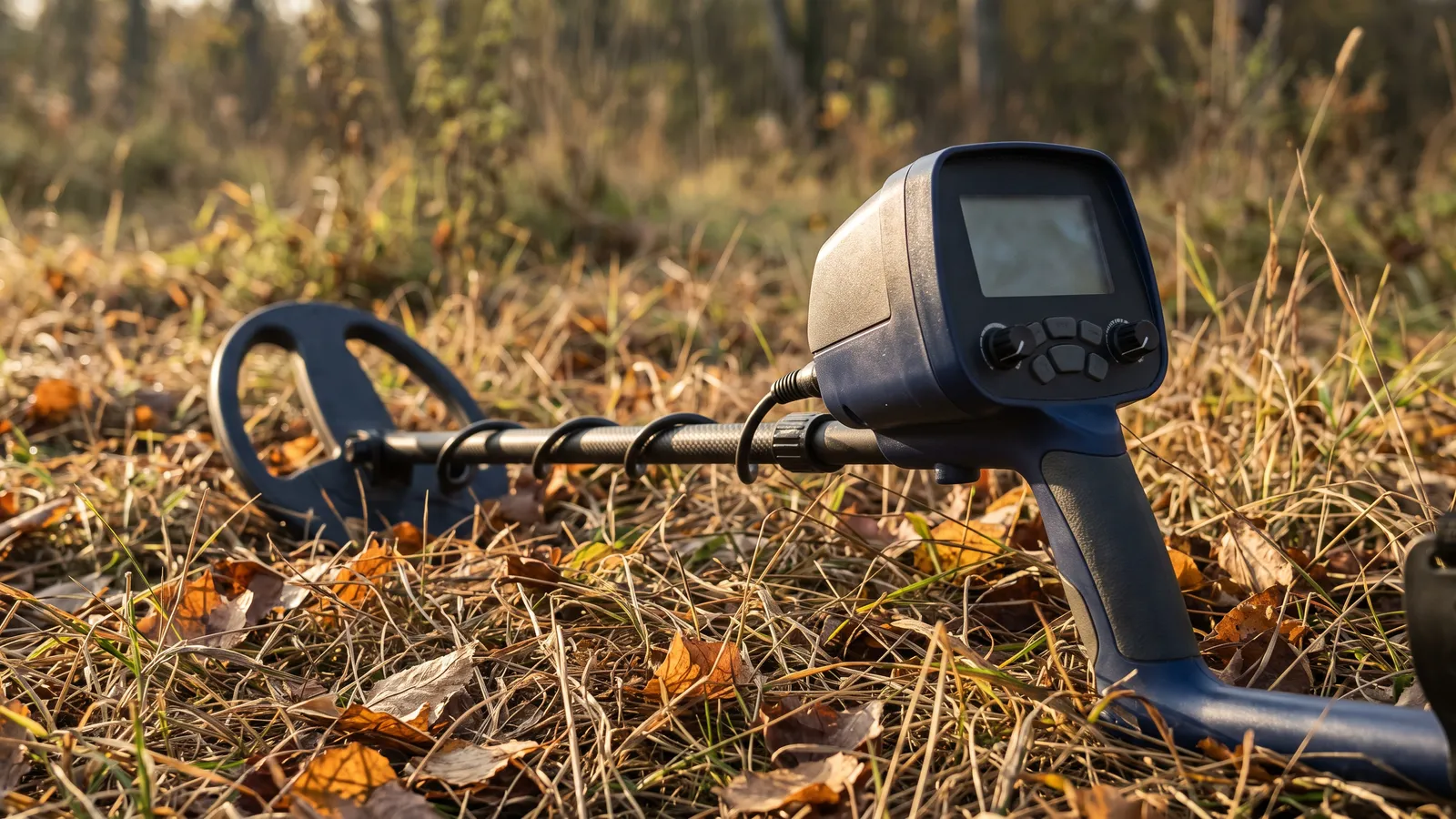
Any working detector can find a ring, but a few features help: an all-metal or jewelry mode, a readable target ID, and pinpoint. Three models from our metal detector comparison fit the job.
The Bounty Hunter Time Ranger is the entry point for yard searches: First Texas lists an 8 in waterproof coil, digital target ID with a depth readout, pinpoint and automatic ground balance, at about 2.6 lb. The full lineup is on our Bounty Hunter page.
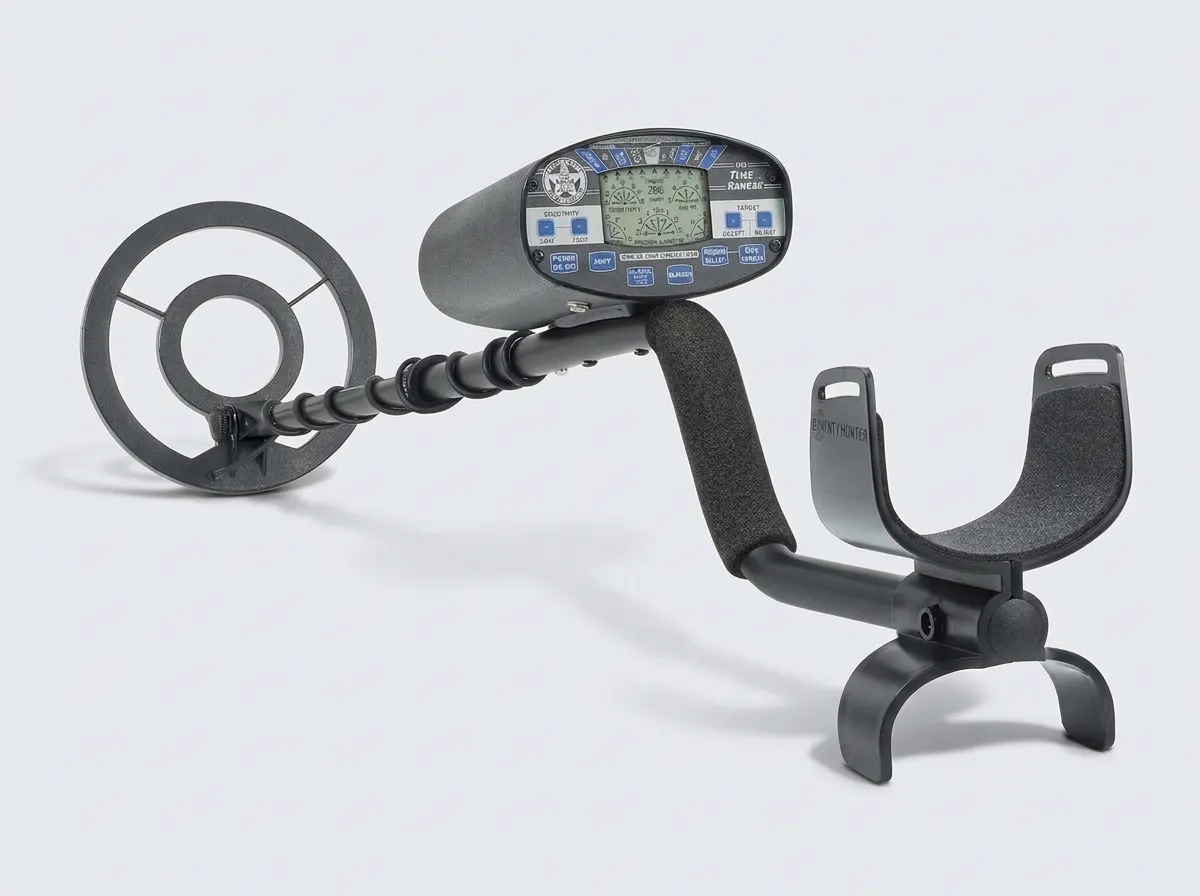
Bounty Hunter Time Ranger
Availability checked on November 11, 2026. Prices change often: the button below shows today’s price and seller offers.
The Garrett ACE 300 adds a finer 0–99 target ID, a dedicated Jewelry mode and electronic pinpointing. It suits lawns, parks and dry sand. Details in our Garrett ACE 300 review.
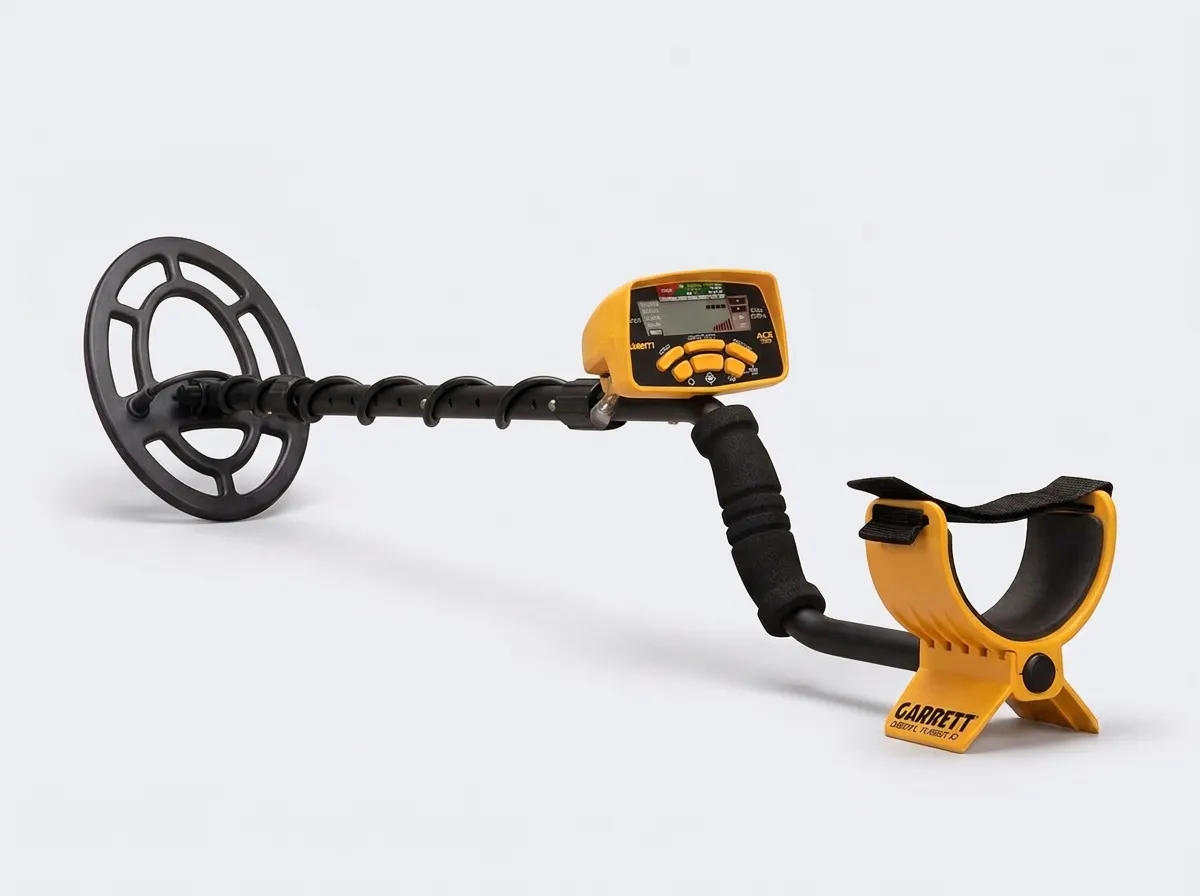
Garrett ACE 300
Availability checked on November 11, 2026. Prices change often: the button below shows today’s price and seller offers.
The Minelab Vanquish 340 has a Jewelry mode and multi-frequency with nothing to set, but its target ID is coarse and Minelab's spec sheet lists no pinpoint mode, so plan on a handheld pinpointer (see our Vanquish 340 review). For a ring lost in wet sand or the surf, the Minelab Vanquish 360 is the better fit: Minelab lists a Beach mode, pinpoint, a −19 to 99 target ID and a body rated IP68, submersible to 16 ft. Both are on our Minelab page.
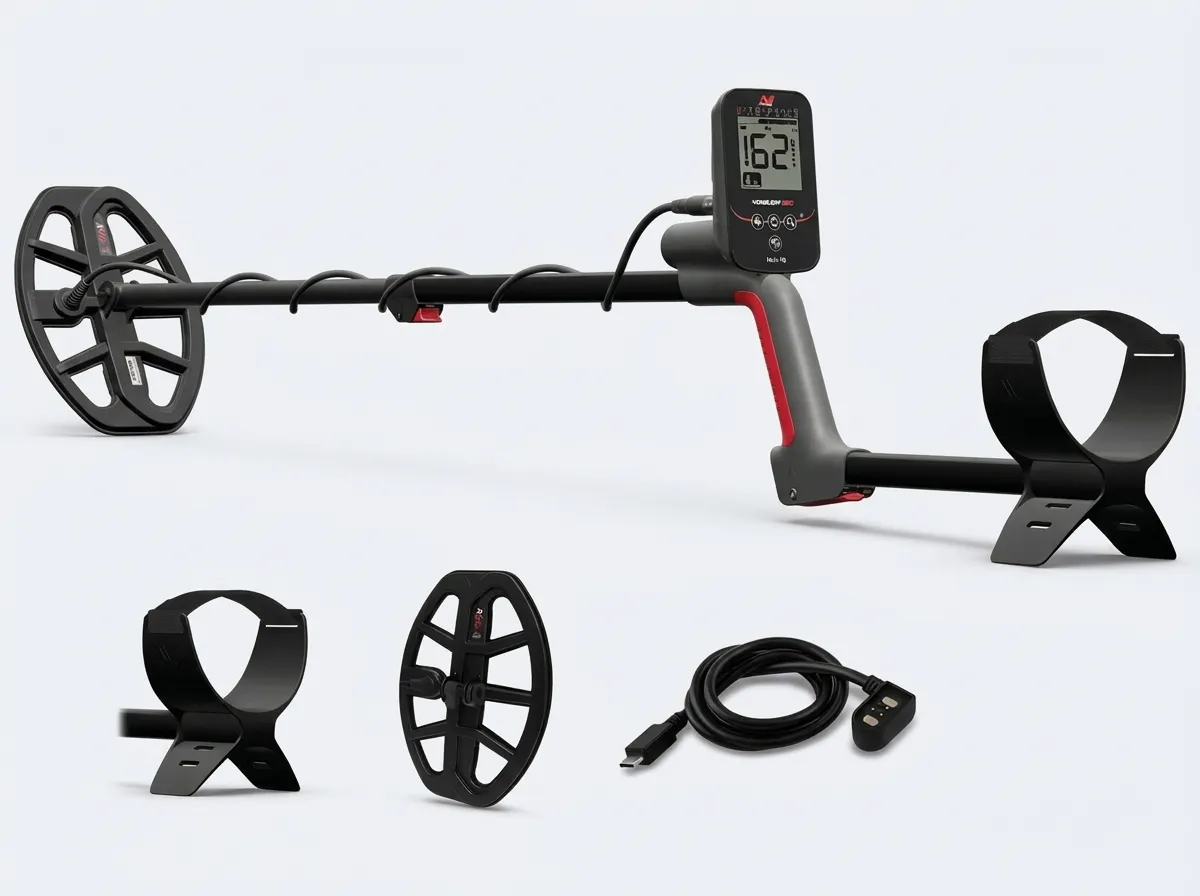
Minelab Vanquish 360
Availability checked on November 11, 2026. Prices change often: the button below shows today’s price and seller offers.
When to call a pro, rent or buy
If your search fails, or the ring went into water, deep snow or a large public area, call a specialist sooner rather than later. The Ring Finders (theringfinders.com) is a directory of independent metal detecting specialists in 18 countries, the US included. You search by town or city and contact one directly. Each works independently, so ask about terms first. The directory's advice is to call quickly, especially for beaches and public places.
Local metal detecting clubs are another route. Some clubs and their members help with lost-ring searches, so it is worth asking. Search for a club in your county, or ask a local detector shop whether it knows one.
Rent or buy? For a one-off search, borrowing a detector or hiring a specialist is often simpler, and The Ring Finders presents its specialists as an alternative to renting. Buying makes sense if you might detect again. An entry-level or mid-range model covers a yard or dry sand; wet sand is what justifies a step-up waterproof multi-frequency model.
Frequently asked questions
Yes. Gold conducts well enough for any hobby detector to sense it at the shallow depths where recently lost rings usually sit. The catch is identification: Garrett notes that many gold rings read in the same mid-range as pull tabs and foil, so you must keep those signals accepted and dig them.

Our guides rely on published sources: studies, official bodies, hobby clubs and manufacturer documentation.
- Garrett: Best Techniques for Finding a Ring with a Metal Detector
- Garrett: Will a Metal Detector Find Tungsten?
- Garrett: Does Titanium Set Off Metal Detectors (security division)
- Garrett: A Guide to Metal Detecting on the Beach
- Garrett: ACE 300 owner's manual (search modes)
- Minelab: Frequently Asked Questions (coil size)
- Minelab: VANQUISH 340 and VANQUISH 360 tech specs
- First Texas Products: Bounty Hunter Time Ranger product page
- Serious Detecting: How to Read a Metal Detector (target ID chart)
- Serious Detecting: Does Titanium Set Off Metal Detectors?
- The Ring Finders: directory of metal detecting specialists (theringfinders.com)