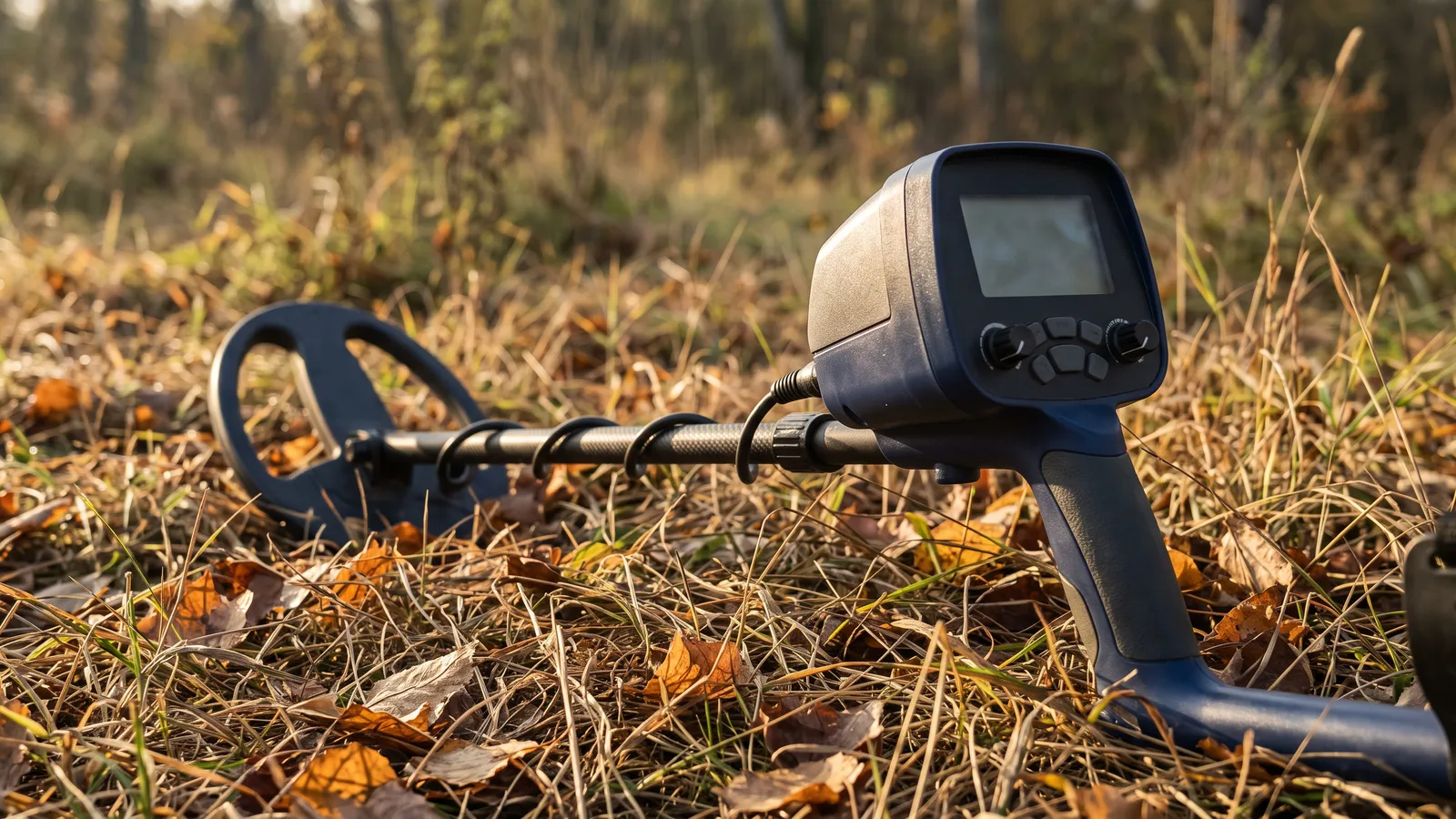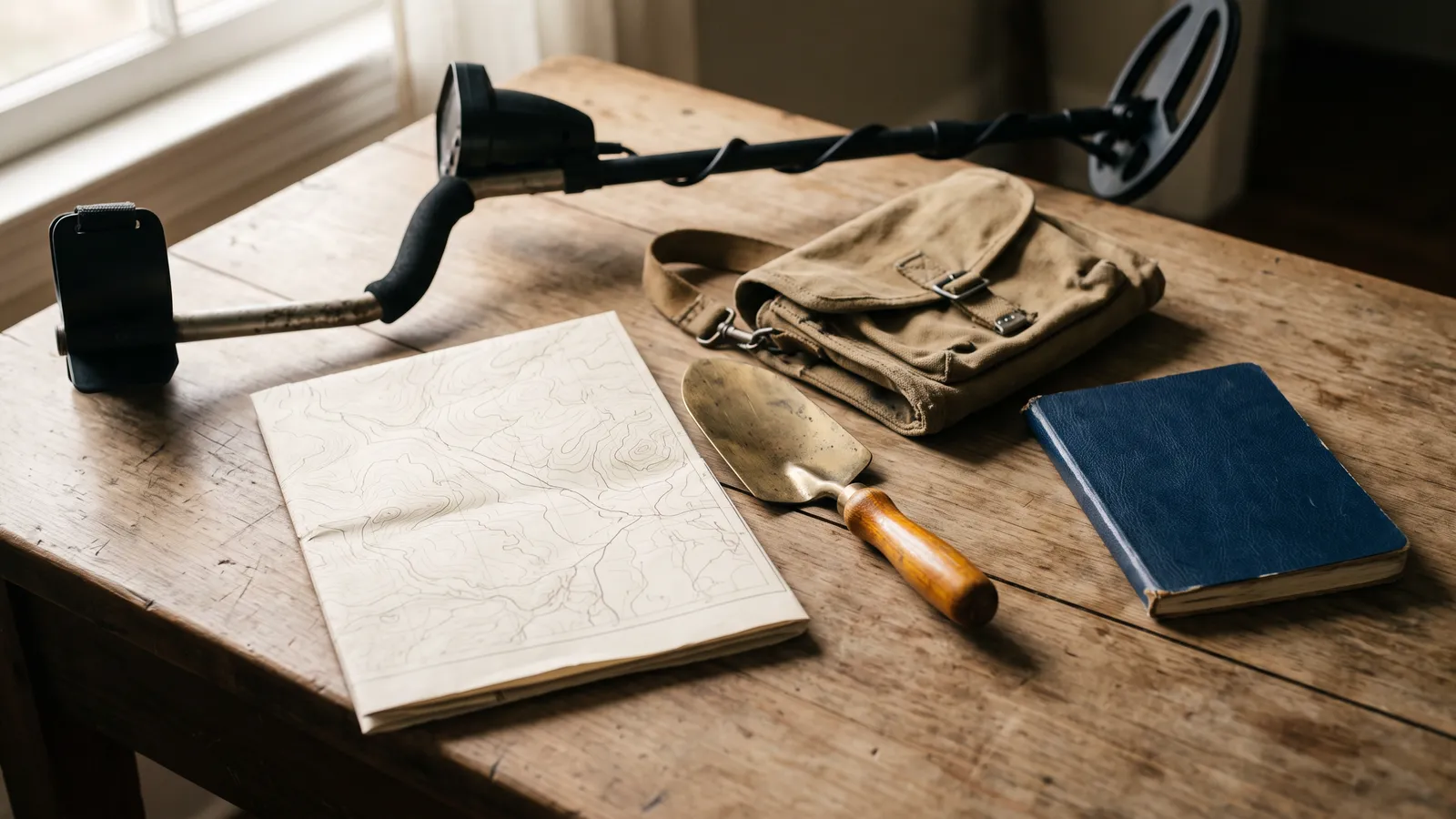
Where you can legally metal detect in the US depends on the ground under your feet. The same beep can be fine on a city ball field, need a permit at a state park beach, and be a federal offense inside a national park. Here is each type of land, with the rule and the official source behind it.
Important: this is general information, not legal advice. Rules differ from one agency, state, county and city to the next, and they change. Local closures and posted signs override general rules. Before you search anywhere, confirm with the land manager (the park office, ranger district, BLM field office or property owner) and, if you have a legal question, ask a lawyer.
Where you can legally metal detect: who manages the land decides
Three layers of rules stack up. Federal law protects archaeological resources on public and tribal lands. Each land agency then writes its own regulations: the National Park Service, the Forest Service, the Bureau of Land Management (BLM) and the Army Corps of Engineers do not treat detectors the same way. States, counties and cities add their own park rules on top. On private land, the owner's permission comes first.
So the first job is finding out who manages the spot you have in mind. The table sums up the general rule for each type of land.
| Where | Allowed? | What to check |
|---|---|---|
| National parks, monuments, battlefields and seashores run by the NPS | No | Possessing or using a detector is prohibited (36 CFR 2.1(a)(7)); a detector broken down and packed away is the narrow exception |
| National forests and grasslands | Generally yes, in appropriate places | Stay away from any historic or archaeological site; local forest rules can be much stricter; prospecting may need a Notice of Intent |
| BLM public lands | Yes for rockhounding and prospecting with minor surface disturbance | Not in developed recreation sites, not on mining claims without the claimholder's permission; cultural items and historic coins stay put |
| Army Corps of Engineers lakes | On designated beaches and previously disturbed areas | Ask the project manager's office for the designated areas and current policy (36 CFR 327.14(d)) |
| Tribal lands | No, unless authorized | ARPA covers Indian lands; ask the tribe |
| State parks | Varies by state, often limited areas or a permit | The state park agency's rules and the park manager |
| City and county parks, public beaches | Varies by town | Local ordinance and the parks and recreation department |
| Private land | Yes, with the owner's permission | Written permission, and an agreement on who keeps what |

Federal land, agency by agency
National parks: leave the detector at home
The National Park Service regulation is blunt. 36 CFR 2.1(a)(7) prohibits "possessing or using" a mineral or metal detector, magnetometer, side scan sonar or similar device in park areas. The listed exceptions are narrow: a device broken down and packed so it cannot be used, navigation electronics on boats and aircraft, and detectors used for authorized scientific, mining or administrative work. The same section, in 2.1(a)(1)(iii), bans digging up or disturbing cultural and archeological resources.
The NPS archeology FAQ goes further in plain words: it says metal detecting is illegal in NPS parks and that visitors may not have detectors in their vehicles. That is stricter than the packed-away exception in the regulation, so keep the detector out of the park or ask first. Fort Smith National Historic Site warns that relic hunting there can lead to confiscation of equipment, arrest and felony prosecution. Many national seashores, battlefields and historic sites are NPS units too.
National forests: yes, with real limits
The Forest Service says metal detecting is allowed as a low-impact recreational activity in appropriate locations. You may look for small, modern items such as coins or jewelry and dig shallow holes that you fully backfill. Developed recreation sites such as campgrounds, picnic areas and swimming beaches are typically open unless a regulation or sign says otherwise, and most do not require a permit.
The limit is history. 36 CFR 261.9 (g) and (h) prohibit digging in, disturbing or removing any prehistoric, historic or archaeological resource. The Forest Service notes that many campgrounds sit on long-used Native American sites, and that not every site is mapped. If you find something old, stop, leave it in place and report it to the local office. Prospecting for gold with a detector falls under mining rules instead, and surface disturbance requires a Notice of Intent under 36 CFR 228 Subpart A.
Local rules can narrow all of this. The George Washington and Jefferson National Forests, for example, allow detecting at the Sherando Lake swimming beach and prohibit it elsewhere on the forest. Always check the specific forest's page.
BLM land: rockhounding yes, relics no
The BLM's "Can I Keep This?" guide says collectors may prospect with hand tools, including metal detectors, if the work causes no more than minor surface disturbance. Reasonable amounts of rocks and minerals, gold included, may be collected for personal use, not for sale. Three restrictions stand out: no collecting in picnic sites, campgrounds and similar developed sites unless permitted, only non-motorized hand tools in wilderness areas, and no collecting on existing mining claims without the claimholder's permission.
Cultural items are off-limits. The BLM lists historic bottles, metal tools, horseshoes, remnants of cabins, mills and railroads, and historic coins: only modern money may be picked up.
Army Corps of Engineers lakes: designated areas only
On Corps project lands, 36 CFR 327.14(d) permits metal detectors on designated beaches or other previously disturbed areas, unless the District Commander prohibits it to protect archaeological, historical or paleontological resources. The rule sends you to the Manager's Office for the local policy and the designated areas. Found items must be handled under the Corps' rules on abandoned property and lost-and-found articles (36 CFR 327.15 and 327.16), except non-identifiable items such as coins worth less than twenty-five dollars.
ARPA and the 100-year rule
The Archaeological Resources Protection Act (ARPA) is the federal law behind many of these rules. Under 16 U.S.C. 470bb, an "archaeological resource" is material remains of past human life of archaeological interest, and nothing counts unless it is at least 100 years old. Section 470cc requires a permit to excavate or remove such resources from public or Indian lands, and those permits go to qualified applicants for scientific work, not hobby digging.
The penalties in 16 U.S.C. 470ee(d) include fines and up to one year in prison for a knowing first violation, up to two years when the value of the resources and the repair costs pass a threshold set in the law, and up to five years for a repeat offense.
Two details trip people up:
- Coins and bullets. The ARPA regulations (43 CFR 7.3) say coins, bullets and unworked minerals and rocks are not archaeological resources unless found in a direct physical relationship with archaeological resources. In other words, a coin lying in a historic site is protected.
- 100 years is not the only line. Agency rules can be stricter than ARPA. The Forest Service treats items older than 50 years as historical resources, the BLM says only modern money may be collected, and Wisconsin's DNR protects archaeological material 50 years old and older. When the rules differ, the strictest one on that land applies to you.
State parks, city parks, beaches and private land
State parks: three examples, three approaches
These are examples only, taken from official state sites. Your state may differ, and park managers can close areas.
- Pennsylvania: DCNR permits reasonable detector use in many state parks, with prior approval from the park manager. Beaches and lake swimming areas are open from the Tuesday after Labor Day to the Saturday before Memorial Day unless posted. Detecting runs sunrise to sunset, and on turf only narrow tools such as screwdrivers or ice picks are allowed. Areas with historical potential may be closed.
- Virginia: DCR allows detectors only on designated man-made beaches and only with a special use permit from the park manager.
- Wisconsin: the DNR allows detectors on its lands only to recover specific lost personal items, with a special permit that names the items, the search area and the dates (between May 1 and October 15).
City and county parks
Local ordinances decide, and they range from open lawns to outright bans. Virginia's Department of Historic Resources notes that some counties allow detecting on man-made beaches or around sports fields. Call or email the parks and recreation department, ask whether detecting is allowed, where, and whether you need a permit, and keep the answer in writing.
Beaches
A beach may belong to a city, a state park, a Corps lake or an NPS national seashore, where detectors are prohibited. Underwater areas can have their own owner: in Virginia, the bottomlands of rivers, the Chesapeake Bay and the coastal zone are state property, and removing artifacts there requires a permit.
Private land
The owner's permission comes first. Virginia's Department of Historic Resources warns that detecting on private property without permission can lead to trespass and theft charges. Ask for written permission that names the property and the dates, and agree in advance on who keeps what you find.
Before you go: a six-step checklist
- Identify the land manager. Agency maps, the local ranger district or the BLM field office can tell you who manages a parcel.
- Read the specific rule. For an NPS unit, the superintendent's compendium lists local rules. For a forest, read that forest's page, not just the national guidance.
- Ask, and keep it in writing. An email from the park office or the landowner beats a forum post.
- Get the permit if one is required. Carry it with you.
- Dig small and fill every hole. Carry out the trash you recover.
- Stop at anything old. Leave it in place, note the location and report it to the land manager.
Next comes the machine. Our metal detector basics guide explains frequency, target ID and coils, and the best metal detectors page compares models. For beaches and shallow water, note that the Garrett ACE 300 has a waterproof coil only, while Minelab rates the X-Terra Pro as fully submersible. Our research method explains how these guides are built.
Frequently asked questions
No. 36 CFR 2.1(a)(7) prohibits possessing or using one in NPS areas, with narrow exceptions such as a device broken down and packed away. Check with the park before you even bring one.

Our guides rely on published sources: studies, official bodies, hobby clubs and manufacturer documentation.
- 36 CFR 2.1 (National Park Service), eCFR
- NPS Archeology FAQ and Fort Smith National Historic Site
- 16 U.S.C. 470bb, 470cc and 470ee (ARPA), Cornell LII
- 43 CFR 7.3 (ARPA uniform regulations), eCFR
- 36 CFR 261.9 (Forest Service), eCFR
- US Forest Service: Metal Detecting (Know Before You Go)
- George Washington and Jefferson National Forests: Metal Detecting Policy
- BLM: Can I Keep This?
- 36 CFR 327.14 (Army Corps of Engineers), eCFR
- Pennsylvania DCNR, Virginia DCR, Wisconsin DNR state park rules
- Virginia Department of Historic Resources: Metal Detecting and Permits