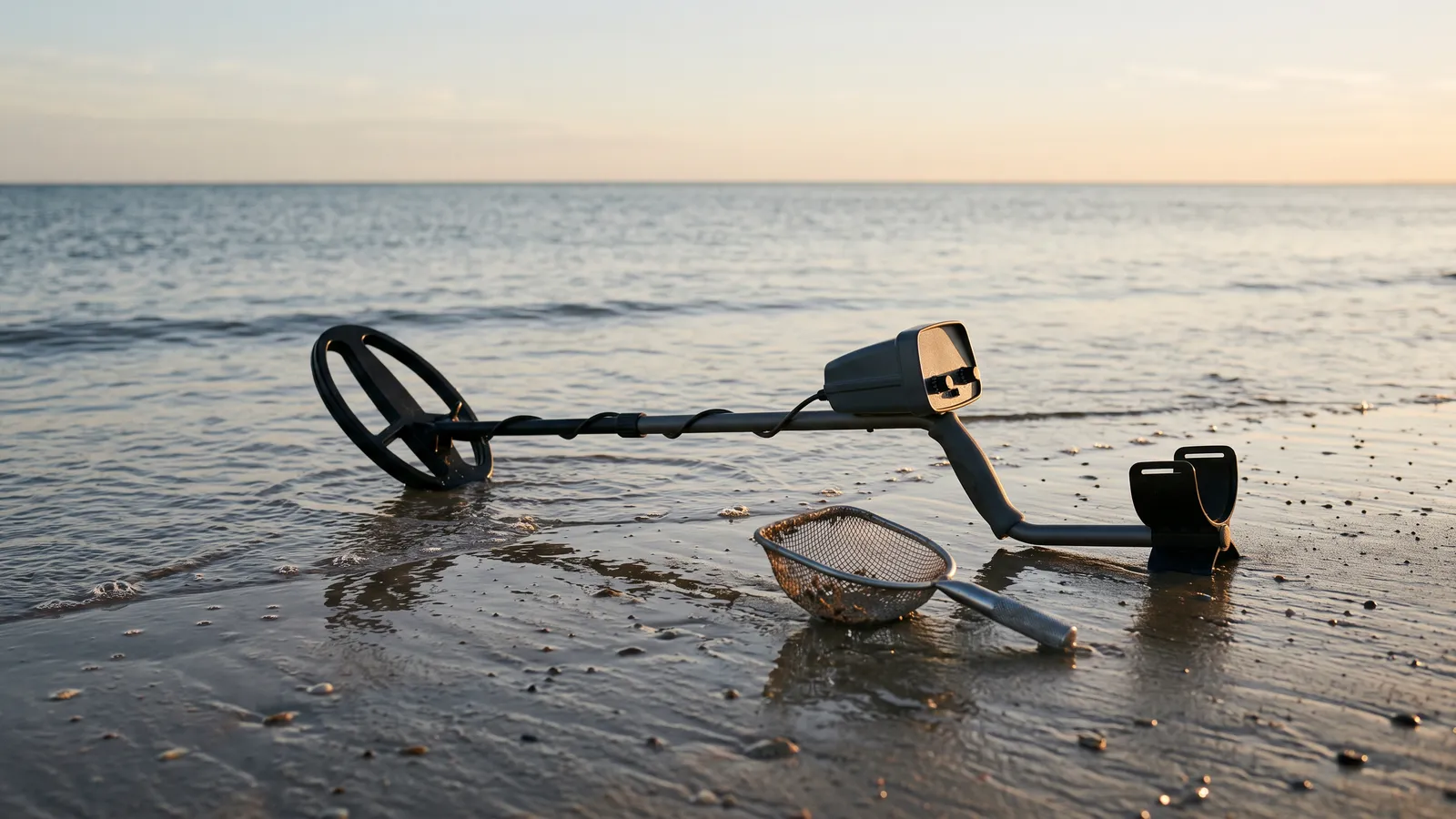
"Waterproof" is one of the most stretched words on a metal detector box. On one model it means you can wade into the surf with the whole machine and dunk it. On another, it means only the round plate at the bottom can get wet, while the electronics on the handle must stay dry. Buy the wrong one, take it chest-deep, and the hunt ends with a dead detector.
This guide explains what the ratings on a waterproof metal detector actually allow, which parts need protecting, what changes in salt water, and which models on our list fit each kind of water hunt. It is built on manufacturer documentation from Garrett and Minelab and on the published specs of each detector.
Three levels of waterproof
Garrett's own guide to underwater detectors sorts machines into three groups. It is the clearest way to read any listing:
| Level | What can go in the water | Where it works | Examples from our list |
|---|---|---|---|
| Water-resistant | Nothing; it survives rain, splashes and damp grass | Dry land in bad weather | Most control boxes of entry-level detectors |
| Waterproof searchcoil | The coil and lower shaft; the control box must stay dry | Wet sand, puddles, creek edges, ankle- to knee-deep wading | Garrett ACE 300, Minelab Vanquish 340, Minelab X-Terra Voyager, Bounty Hunter Tracker IV |
| Fully submersible | The whole detector, to a published depth | Surf, lakes, rivers, snorkeling depth | Minelab X-Terra Pro and Minelab Vanquish 360 (16 ft); Garrett AT series (10 ft) and Vortex series (16 ft) |
Garrett's rule for the middle group is blunt: keep the control box above water. And its advice for every listing is the same: check the rating of the complete detector, not just the coil.
That matters because many Amazon titles lead with "Waterproof Coil." Minelab rates the Vanquish 340 and the X-Terra Voyager coils as waterproof to 1 m (3.3 ft); that rating covers the coil, not the control box on the handle. The Garrett ACE 300 and the Bounty Hunter Tracker IV also have waterproof coils only, according to their makers. These are fine machines for parks and dry beaches that can also sweep wet sand and shallow edges, but they are not water detectors.
What IP68 and "16 feet" really mean
Fully submersible detectors usually carry an IP68 rating. In the IP code, the 6 means dust-tight and the 8 means protected against continuous immersion beyond 1 meter; the exact depth and duration are set by the manufacturer. Garrett's underwater guide describes IP68 the same way. So the useful number is the one the maker prints next to it:
- Minelab X-Terra Pro: IP68, fully waterproof to 5 m (16 ft), according to Minelab.
- Minelab Vanquish 360: IP68, fully submersible to 5 m (16 ft), according to Minelab.
- Garrett Vortex series: fully waterproof to 16 ft (5 m), according to Garrett.
- Garrett AT series: fully waterproof to 10 ft (3 m), according to Garrett.
Garrett is explicit that these ratings suit wading, snorkeling and shallow-water recovery, not deep scuba diving. Its advice is to choose a rating deeper than the deepest water you expect, and never exceed the published limit. Divers use dedicated machines rated far deeper, usually pulse induction models (more on that below).
In practice, 16 ft covers almost everything a recreational hunter does: wading the swim zone, working the drop-off past the waves, crossing a river, or holding the detector underwater while snorkeling a lake.
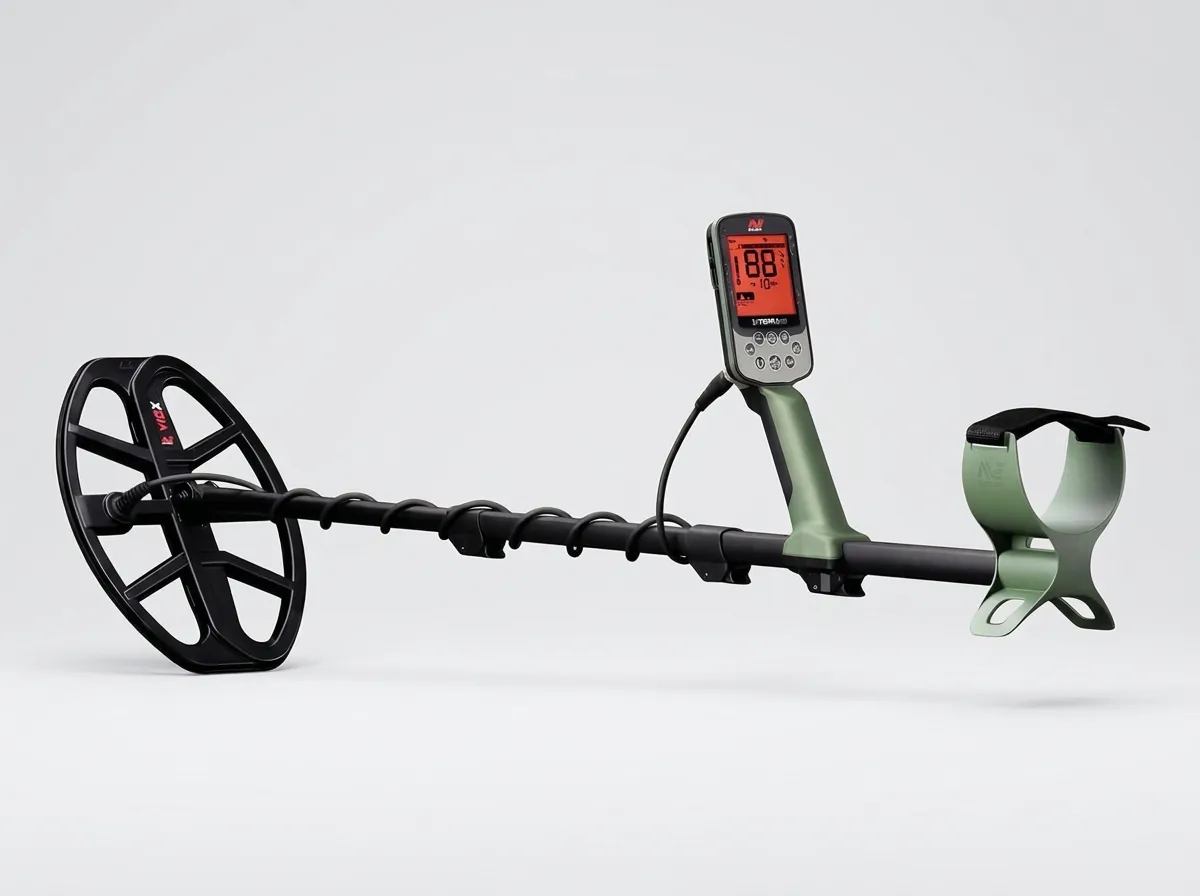
Minelab X-Terra Pro
Availability checked on November 11, 2026. Prices change often: the button below shows today’s price and seller offers.
Headphones: the part people forget
A submersible detector is only submersible as a system. Three details decide whether your audio survives:
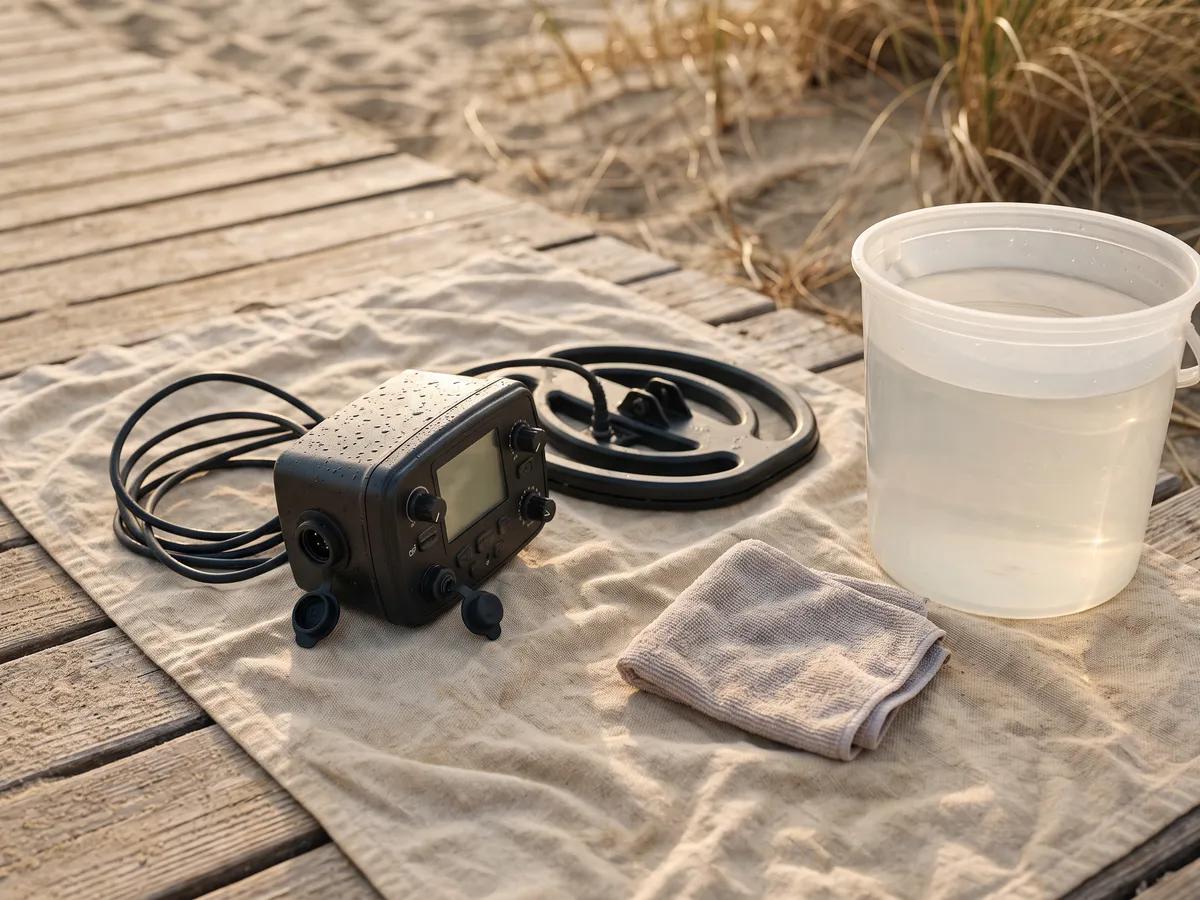
- The headphone socket. Minelab lists a headphone socket with a waterproof cap on the X-Terra Pro. If you go in without headphones, that cap must be firmly in place. Garrett's checklist for salt water includes checking seals, O-rings and caps.
- The headphones themselves. Garrett says that if the headphones or their connection will go underwater, you need the compatible submersible headphones specified for your detector, and that ordinary land headphones should not be submerged. Minelab and Garrett both sell dedicated waterproof models.
- Wireless audio. Garrett's underwater FAQ states that standard wireless signals do not travel effectively through water. The X-Terra Pro's low-latency wireless audio is handy on the beach, but once your head and the control box are under the surface, plan on wired, submersible headphones. One Garrett article suggests its own Z-Lynk system keeps working when submerged, while its FAQ gives the general warning; when in doubt, follow the manual for your exact model.
On the beach at the waterline, the built-in speaker is often enough. Once the waves get loud, or the control box is underwater, headphones become the only way to hear faint signals.
Salt water changes more than the seals
Being sealed against water is one thing. Detecting well in salt water is another.
Garrett explains that dissolved salt and minerals make wet sand and seawater conductive, which causes false signals on standard detectors. Its guide ranks the technologies this way:
- Pulse induction (PI) detectors handle salt water best and are not fooled by its conductivity. They are the usual choice for divers and serious surf hunters, but they generally offer little or no target identification. None of the detectors on our list is a PI machine.
- Simultaneous multi-frequency detectors, and dedicated salt modes such as Garrett's Multi-Salt, also perform well in salt water. Minelab's Multi-IQ, used in the Vanquish 360 and 340, is a simultaneous multi-frequency design, and the Vanquish 360 adds a Beach mode.
- Single-frequency VLF detectors are excellent in calm fresh water, Garrett says, but struggle more in wet salt sand. The X-Terra Pro is single frequency at a time, with a dedicated Beach mode; it suits lakes, rivers and dry beaches very well, and wet salt sand with more tuning.
Our metal detector basics guide explains frequency, multi-frequency and ground balance in more depth. For the short list of models we would pick for sand and surf, see the best beach metal detectors.
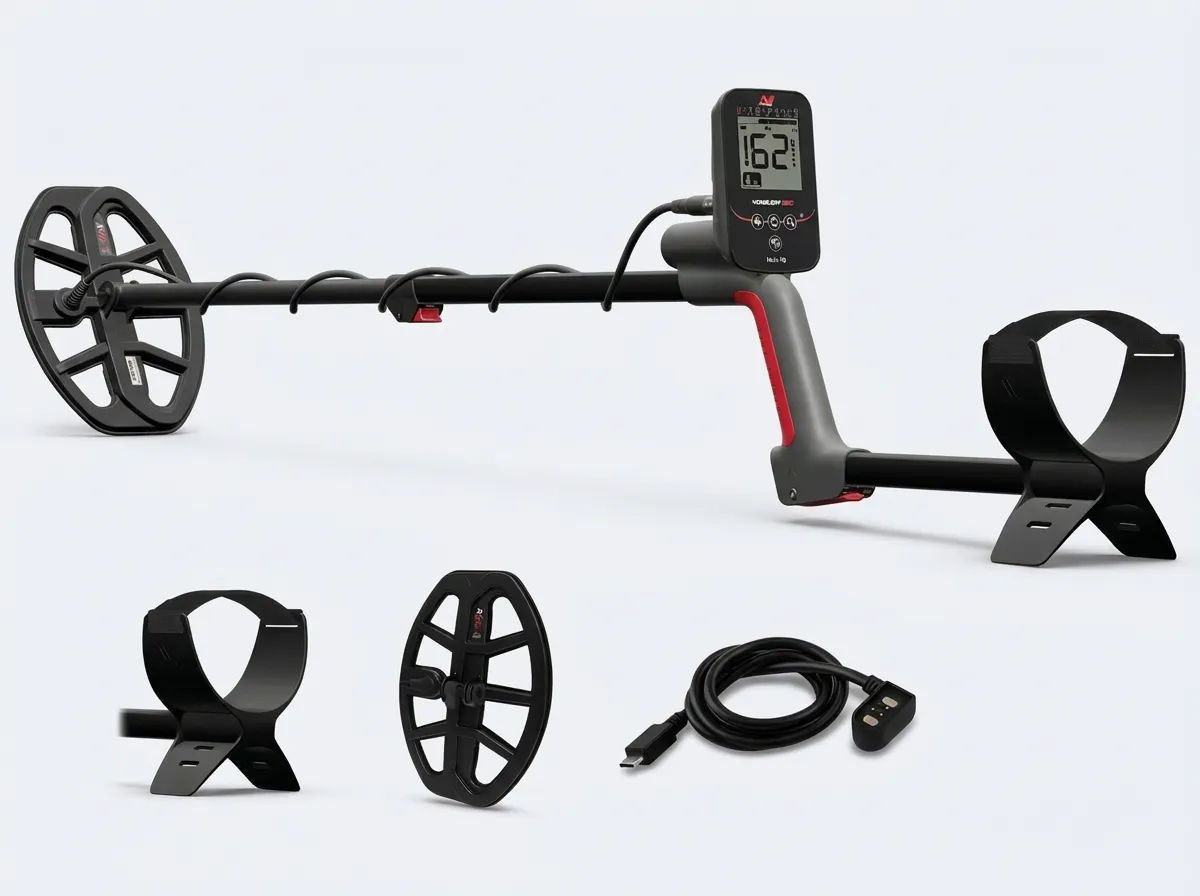
Minelab Vanquish 360
Availability checked on November 11, 2026. Prices change often: the button below shows today’s price and seller offers.
Which waterproof metal detector for which water
Match the rating to the deepest place you will actually go:
| Your plan | What you need | Good fits from our list |
|---|---|---|
| Parks and yards, with wet grass or a dry beach now and then | Waterproof coil is enough | Garrett ACE 300, Bounty Hunter Tracker IV |
| Wet sand at the waterline, creek edges, ankle-deep puddles | Waterproof coil, control box kept high and dry | Minelab Vanquish 340, Minelab X-Terra Voyager |
| Wading the swim zone, lakes, rivers | Fully submersible, IP68 | Minelab X-Terra Pro, Minelab Vanquish 360 |
| Ocean surf and wet salt sand | Fully submersible plus multi-frequency or a salt mode | Minelab Vanquish 360 |
| Scuba diving | A dive-rated detector, often PI, rated beyond your dive depth | Outside our list |
If you are torn between the two submersible Minelabs: the X-Terra Pro gives you four selectable frequencies and manual ground balance, for hunters who like to tune. The Vanquish 360 is set-and-forget multi-frequency with Park, Beach and All Metal modes and a built-in rechargeable battery. Both are compared on our Minelab brand page.
Care after every water hunt
A sealed detector still needs care, especially after the ocean:
- Rinse with fresh water after salt water. Garrett recommends it for its submersible detectors, then following the care instructions in the manual. Salt crystals left to dry around joints, buttons and the coil connection are what wear seals down.
- Check seals, O-rings and caps before each water session, as Garrett advises. A headphone cap left loose is the most common way water gets in.
- Dry everything before storage, with the battery or charging port covers open only once the unit is dry outside.
- Do not trust a coil-only detector beyond its coil. If a wave reaches the control box of an ACE 300 or a Vanquish 340, that is outside what the maker rates it for.
- Know the rules for the water you hunt. Beaches and lake bottoms can belong to a city, a state, the Army Corps of Engineers or a national seashore where detectors are banned. Our guide on where you can legally metal detect covers each case.
Once a target beeps underwater, a waterproof pinpointer and a long-handled sand scoop make recovery far easier; Garrett rates its PRO-Pointer AT as submersible to 20 ft. For the full field of models, including land detectors, see our best metal detector comparison.
Frequently asked questions
Yes, if the whole detector is rated submersible, such as the Minelab X-Terra Pro or Vanquish 360 (IP68 to 16 ft). A detector with only a waterproof coil can sweep wet sand and shallow edges, but its control box must stay out of the water. Rinse any detector with fresh water after the ocean.

Our guides rely on published sources: studies, official bodies, hobby clubs and manufacturer documentation.
- Garrett: Underwater Metal Detectors (water-resistant, waterproof searchcoil and fully submersible; Vortex and AT depth ratings; underwater FAQ)
- Garrett: Do Metal Detectors Work Underwater? What You Need to Know (Steve Moore, April 2026)
- Minelab: X-TERRA PRO product page (IP68 to 5 m / 16 ft, headphone socket with waterproof cap, wireless audio)
- Minelab: VANQUISH 360 product page (IP68 to 5 m / 16 ft, Park, Beach and All Metal modes)
- Minelab: X-TERRA PRO tech specs (frequencies by search mode)
- Manufacturer specs for the Minelab Vanquish 340, Minelab X-Terra Voyager, Garrett ACE 300 and Bounty Hunter Tracker IV, as recorded in our product sheets