You hang a brand-new feeder, fill it to the top, open the app, and wait. A day goes by. Then three. The birds you can hear in the trees fly right past it. It is the most common frustration in backyard birding, and it usually has nothing to do with the feeder being bad.
Learning how to attract birds to a new bird feeder is mostly about seeing your yard the way a small, nervous bird does: where is the food, is it worth the risk, and where can I hide? This guide brings together what the National Audubon Society, Project FeederWatch (run by the Cornell Lab of Ornithology and Birds Canada) and experienced feeder retailers say, then adds what changes when the feeder has a camera on it.
How long does it take birds to find a new feeder?
Anywhere from a few hours to several weeks. That is not a dodge; it is what the sources say.
The Audubon Guide to Bird Feeding puts it plainly: it may be a matter of hours, or a matter of weeks. The difference depends on three things:
- How close bird habitat is. A feeder next to woods or mature trees gets noticed faster than one in a new subdivision with no big trees, or in open farmland. A Wild Birds Unlimited store guide makes the same point.
- How many feeders your neighbors have. If feeding is common on your street, local birds already link feeders with an easy meal, so they find yours sooner.
- Which birds live nearby. Audubon names chickadees, titmice and House Sparrows as especially quick to find new feeders. Expect them first.
Wild Birds Unlimited adds a more cautious number: even when birds notice the food right away, it can take them three to four weeks to start eating from a new feeder, and possibly twice that for a specialty feeder such as suet or peanuts. Birds are wary of new objects. Even a shiny new feeder that replaces an old one can need an adjustment period.
Season matters too. Audubon notes that feeders help birds most in winter, when natural food runs short, and Wild Birds Unlimited points out that fall can be quiet because wild food is plentiful. So if your camera has shown nothing but empty perches for a week, you are not doing anything wrong yet.
Start with the seed birds actually want
The fastest way to slow things down is the wrong food. Audubon and Project FeederWatch agree on the starting point: black-oil sunflower seed appeals to the greatest number of birds. FeederWatch calls it the most common feeder seed in North America, high in energy with a thin shell, and among the favorites of cardinals, chickadees, finches and sparrows.
Here is what each common food brings in, according to FeederWatch and Audubon:
| Food | Birds it tends to attract | Notes for a new feeder |
|---|---|---|
| Black-oil sunflower | Cardinals, chickadees, titmice, finches, nuthatches, sparrows | The best first fill for almost any yard |
| Hulled sunflower (hearts) | Anything that eats sunflower | Less mess under the feeder; spoils faster, keep it dry |
| Safflower | Cardinals and other big-billed birds | FeederWatch notes most birds still prefer sunflower |
| Nyjer (thistle) | American Goldfinch, Pine Siskin | Needs a feeder with tiny ports; offer it on its own |
| Peanuts and peanut pieces | Chickadees, titmice, nuthatches, jays | Plain only, never salted or flavored |
| Millet, cracked corn | Juncos, sparrows, doves | Better scattered low or on a tray than in a hopper |
| Suet | Woodpeckers, nuthatches, chickadees, wrens | Best in cool weather unless it is a no-melt cake |
| Milo, wheat, oats | Few species | Common in cheap blends; Audubon and FeederWatch advise avoiding them |
Two habits make a big difference with a new feeder:
- Skip filler blends. Both Audubon and FeederWatch warn that milo, wheat and oats go largely uneaten. Birds pick out the few good seeds and may not come back.
- Keep the seed fresh. Wild Birds Unlimited says seed in a feeder stays good for about one to two weeks in sun and humidity, and wet seed spoils in days. Until birds are visiting, fill the feeder only partway and change the seed often, so it is still fresh when they finally try it.
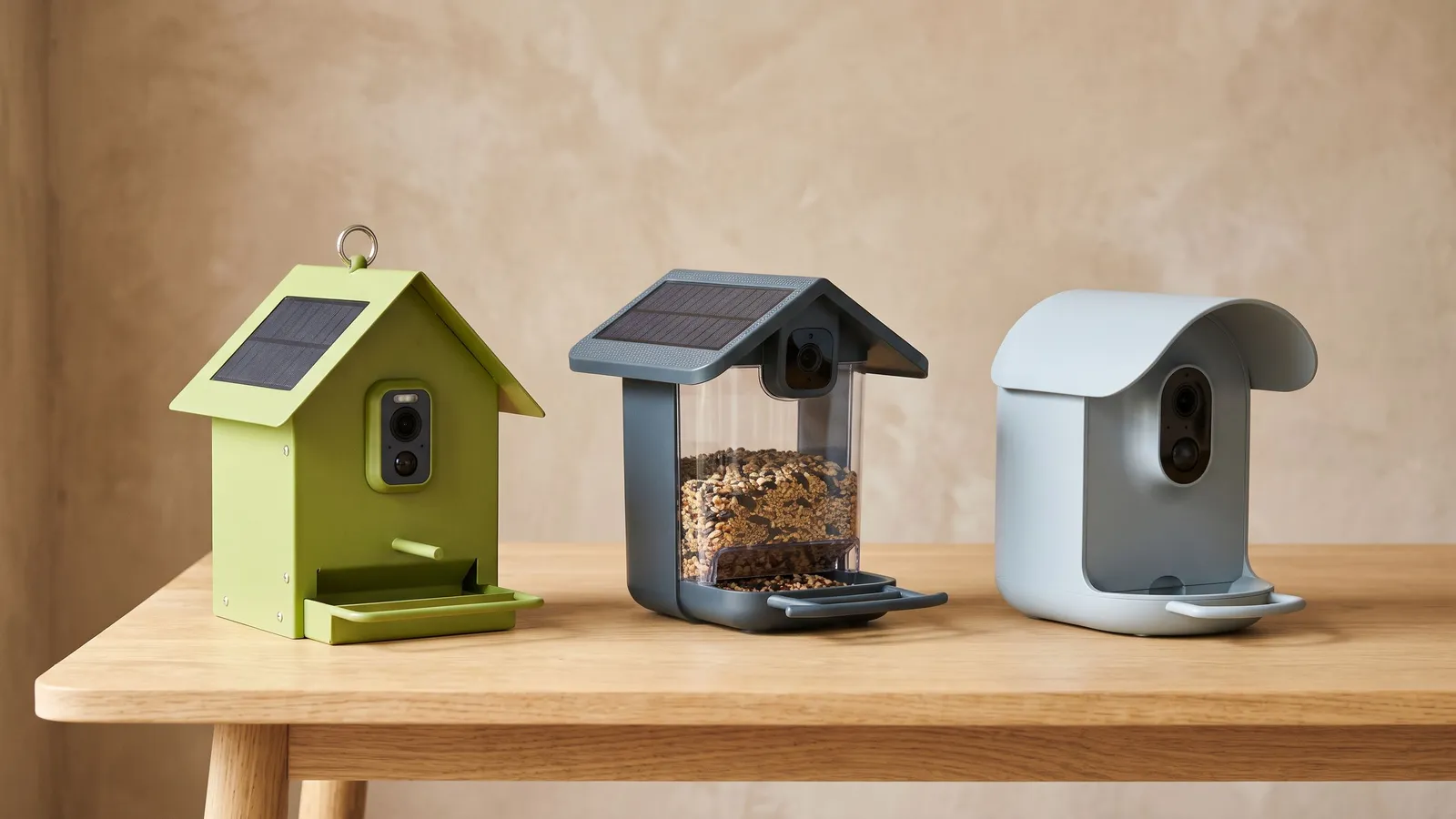
Several smart feeders in our comparison hold between 1.3 and 1.7 liters of seed, according to their makers, so partial fills are easy. If your feeder has two compartments, like the Kiwibit Feeder 2, FeederWatch's advice to offer different seeds separately fits neatly: sunflower on one side, safflower or peanut pieces on the other.
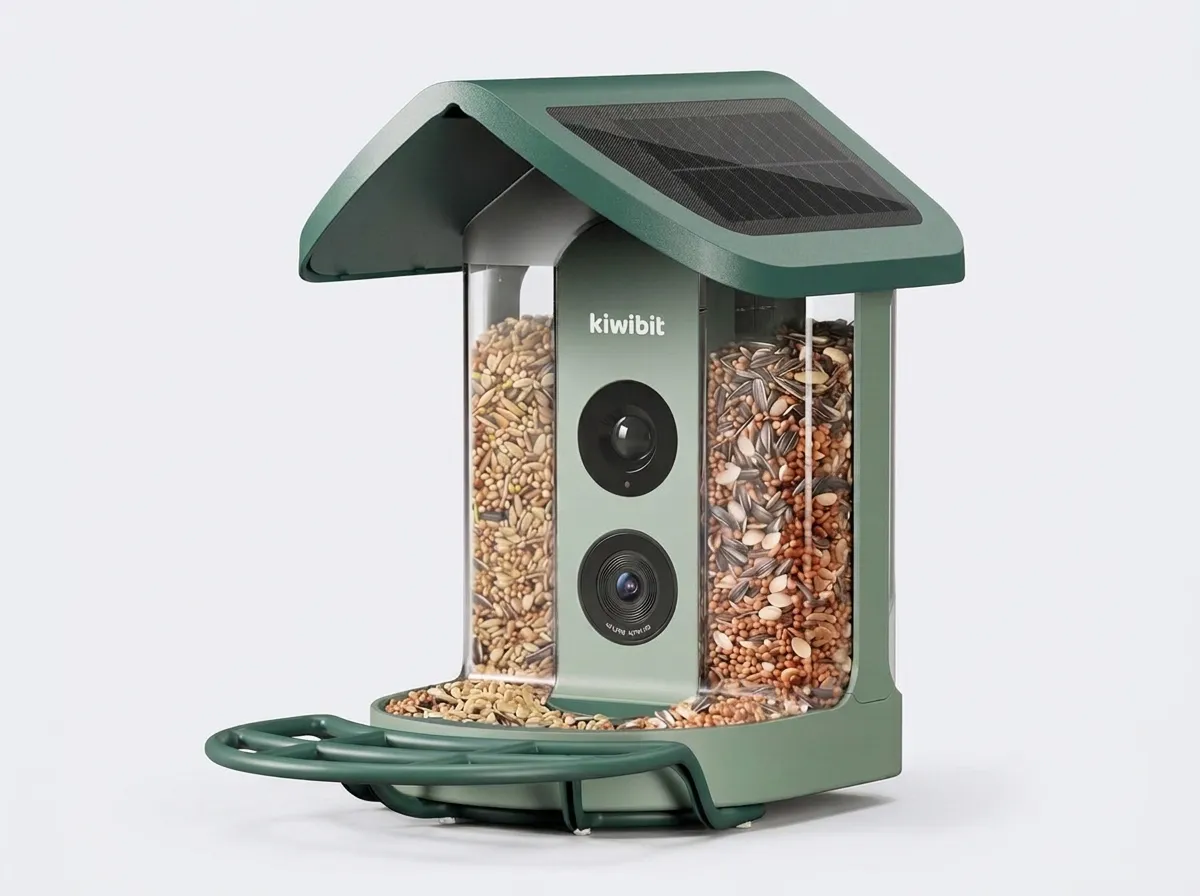
Kiwibit Feeder 2
Availability checked on November 11, 2026. Prices change often: the button below shows today’s price and seller offers.
Make the feeder easy to spot and safe to visit
Birds find food by sight, Wild Birds Unlimited notes, so the feeder has to be visible from where birds already spend time. At the same time, a small bird has to believe it can escape a hawk or a cat. Placement balances both.
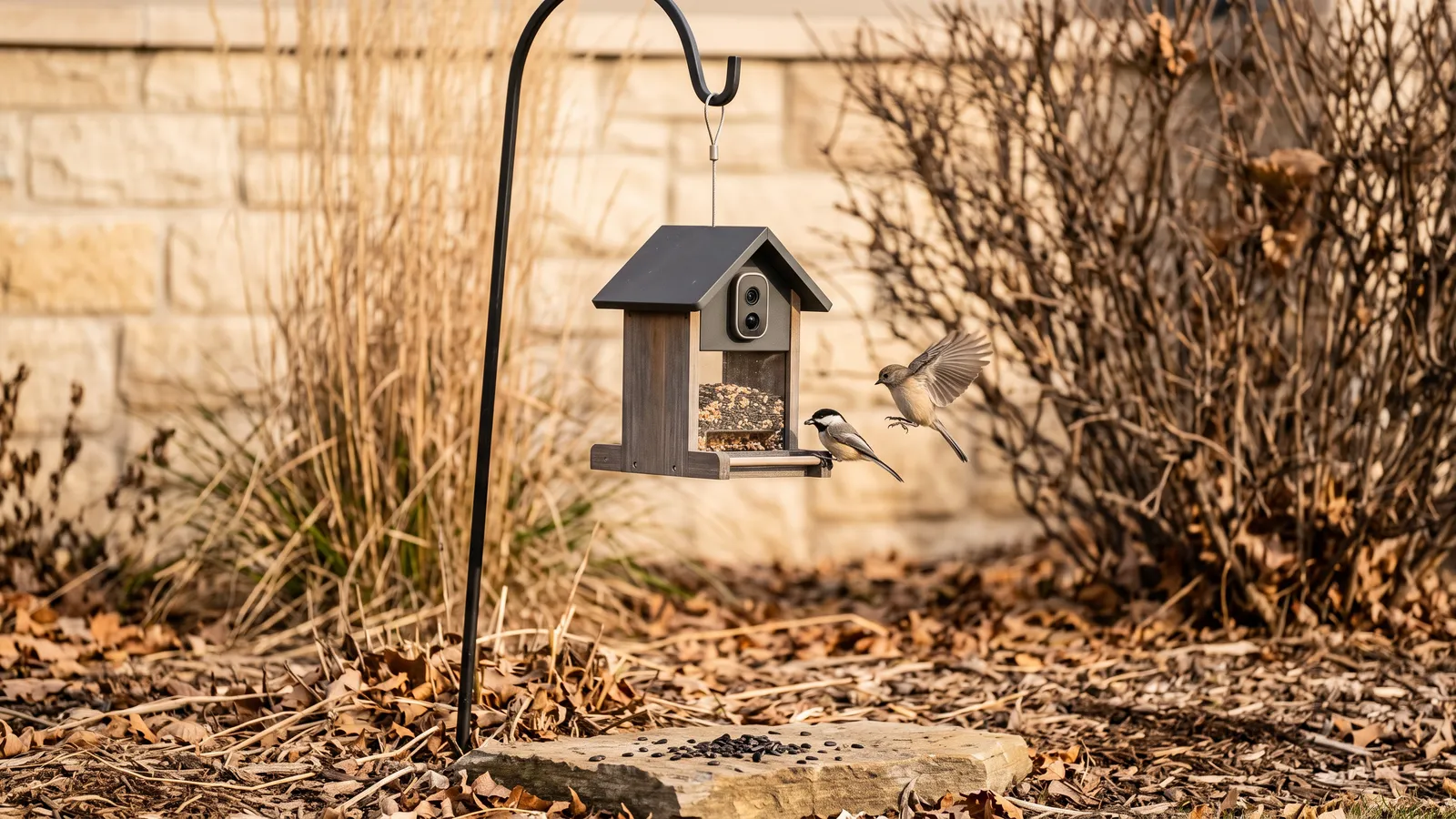
Cover nearby, but not too close. FeederWatch recommends placing feeders near natural cover such as trees or shrubs, where birds can wait their turn and duck away from predators. It also warns against cover with branches that give squirrels and cats a launch point, and suggests about 10 feet as a good compromise. Audubon gives the same 10-foot distance for pole-mounted feeders.
A quiet spot. FeederWatch advises a quiet area that is easy to see and convenient to refill. A feeder next to a busy door, a barking dog or a loud air conditioner will stay empty longer.
Mind the windows. Audubon recommends placing feeders less than 3 feet from a window or more than 30 feet away to reduce collisions, and FeederWatch recommends marking the outside of windows with patterns spaced no more than 2 inches apart. Our guide on where to hang a bird feeder camera covers windows, Wi-Fi range and solar exposure in detail.
Add water. This is the step most people skip. Audubon lists three essentials for keeping birds coming back: quality seed, fresh water for drinking and bathing, and cover, ideally native plants. FeederWatch notes that birds are drawn to water just as they are to feeders, and that a dripping source makes a birdbath even more attractive. In freezing climates, a birdbath heater keeps it usable; FeederWatch warns never to add antifreeze. A shallow dish a few yards from the feeder can bring in birds that then discover the seed.
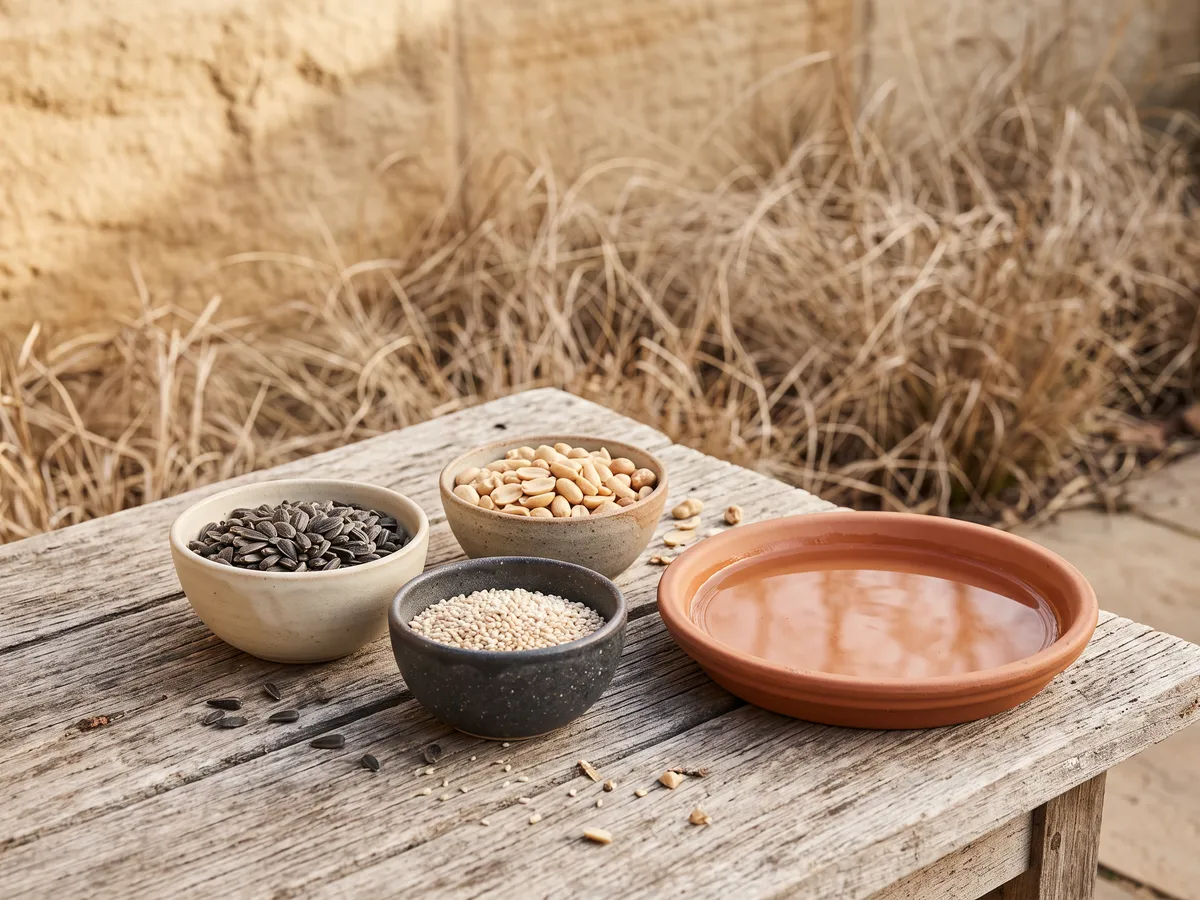
Tricks for the first visitors
When the basics are in place and birds are still hesitant, these steps come straight from Audubon and FeederWatch:
- Scatter a little seed where birds can see it. Audubon suggests sprinkling sunflower seeds on top of the feeder and on nearby surfaces such as bare soil. Many species, including sparrows, doves and towhees, feed on the ground and rarely land on an elevated feeder, FeederWatch says, so a small amount on the ground or on a flat surface draws them in first. Keep it small: spilled seed attracts rodents and can spoil.
- Try a decoy. Audubon notes that bird decoys may help lure the first visitors, after which other birds notice the new food source.
- Watch at the right time of day. Audubon says birds visit feeders most in the early morning and again just before dusk, and less in the afternoon and in rain. Check your camera's clips from those windows before deciding nothing came.
- Use the weather. According to Audubon, snow-covered ground pushes sparrows and juncos to feeders, since they normally forage on bare ground. The first snow is often when a quiet feeder comes alive.
- Do not move it every day. Give one good spot at least a couple of weeks. Each move resets the clock for wary birds.
Why birds stop coming, and what to fix
Sometimes birds visit a few times and then disappear. Wild Birds Unlimited lists the usual causes; here is a quick fix for each:
| What you notice | Likely cause | What to do |
|---|---|---|
| Seed clumped, dark or smelly | Old or wet seed | Empty, clean and refill with a smaller amount |
| Visits drop over weeks | Dirty feeder | Clean it (see below) |
| Birds pick and toss seed | Cheap blend with fillers | Switch to black-oil sunflower |
| Sudden silence | A hawk or cat nearby | Wait; hawks usually move on, keep cats indoors |
| Quiet in early fall | Wild food is plentiful | Normal; activity picks up as natural food runs out |
| Only big birds now | Large hopper or tray | Smaller feeders or short perches favor small birds, says FeederWatch |
Keep it clean from day one. FeederWatch recommends cleaning seed feeders every week or two, and more often in wet weather or heavy use: take them apart, scrub off debris, wash with warm soapy water, rinse and let them dry fully. For extra protection it suggests a 10-minute soak in diluted bleach (one part bleach to nine parts water), then a careful rinse. On a camera feeder, remove the camera module first and follow the maker's instructions. FeederWatch also recommends raking up waste under the feeder and wearing gloves.
Predators reset everything. Wild Birds Unlimited notes that a lurking hawk makes songbirds scarce, and they usually return once the hawk moves on. FeederWatch strongly recommends keeping pet cats indoors, noting that cats kill hundreds of millions of birds a year.
Getting the birds on camera
A camera feeder adds a few extra steps of its own:
- Test the camera before the birds arrive. Make sure the Wi-Fi link is stable and alerts reach your phone, so the first visit is not lost.
- Lower motion sensitivity if you get swamped with empty clips. Swaying branches and shadows trigger recordings; many apps let you narrow the detection zone or sensitivity.
- Point the perch toward even light. A feeder facing into low morning sun gives backlit silhouettes. Soft, even light makes for clearer clips and better AI identification.
- Use the free ID features while you wait. Some brands identify species without a paid plan, which makes even a single visit worth reviewing. Our guide to bird feeder camera subscriptions explains what each brand includes for free.
If you are still choosing a feeder, the Birdfy Feeder Rookie is a simple first camera feeder with free bird ID and a side-mounted camera for profile shots, and our best bird feeder camera comparison covers the other options, including solar powered models.
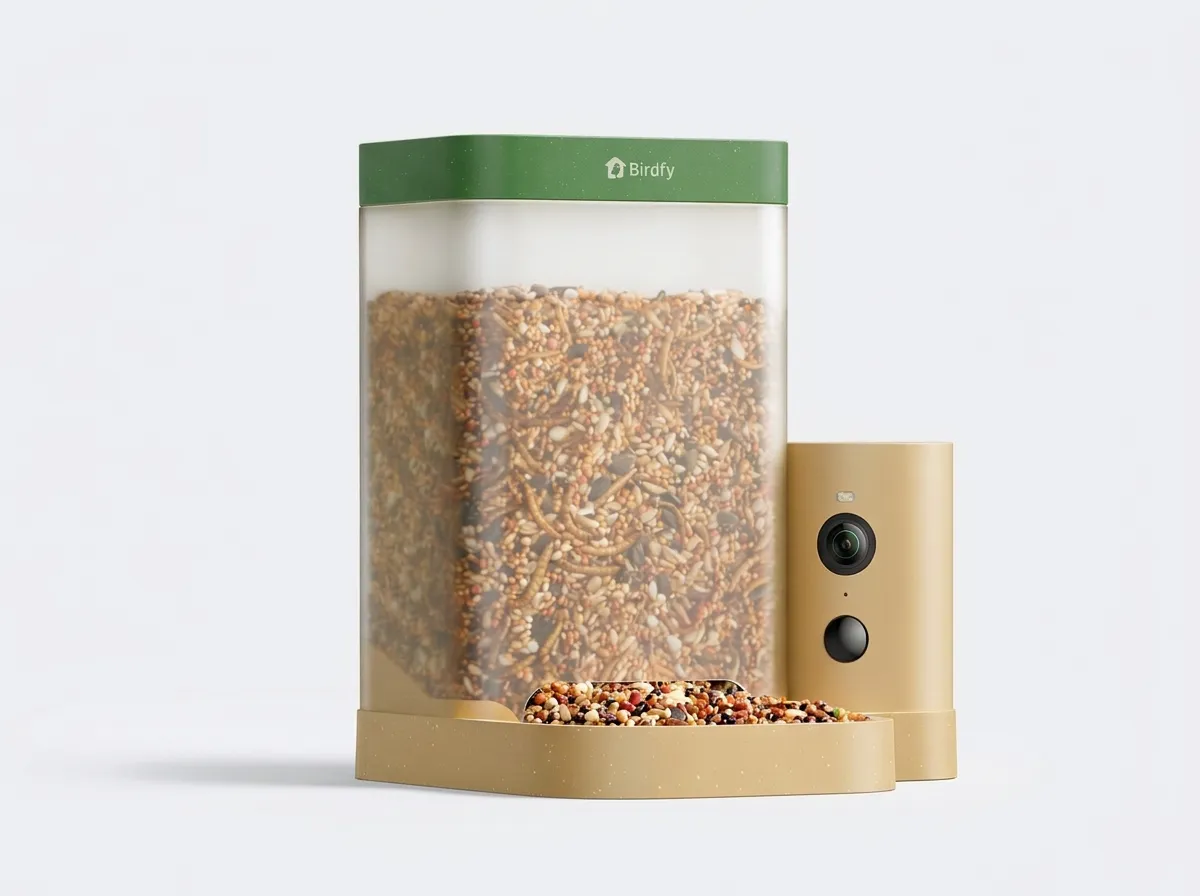
Birdfy Feeder Rookie
Availability checked on November 11, 2026. Prices change often: the button below shows today’s price and seller offers.
Frequently asked questions
Anywhere from a few hours to several weeks, according to the Audubon Guide to Bird Feeding. It depends on how close bird habitat is, how many feeders your neighbors have and which birds live nearby. Wild Birds Unlimited notes it can take three to four weeks before birds feed regularly from a new feeder.

Our guides rely on published sources: studies, official bodies, hobby clubs and manufacturer documentation.
- National Audubon Society: Audubon Guide to Bird Feeding (Stephen W. Kress)
- Audubon magazine: 11 Tips for Feeding Backyard Birds
- Project FeederWatch (Cornell Lab of Ornithology and Birds Canada): Feeding Birds (food types, feeder types, placement, cleaning)
- Wild Birds Unlimited (Winter Springs, FL store): Why Aren't the Birds Eating at My Feeder?
- Birdfy and Kiwibit product pages (seed capacity, compartments), as recorded in our product sheets