This Minelab Vanquish 340 review is for UK beginners who want a multi-frequency detector they can take from the box to a council park, a ploughed field or the beach without reading a manual first. It runs Minelab's Multi-IQ on several frequencies at once, with no frequency or ground balance to choose. In exchange, you accept a coarse target ID, no pinpoint mode on Minelab's spec sheet and a control box that must stay dry.
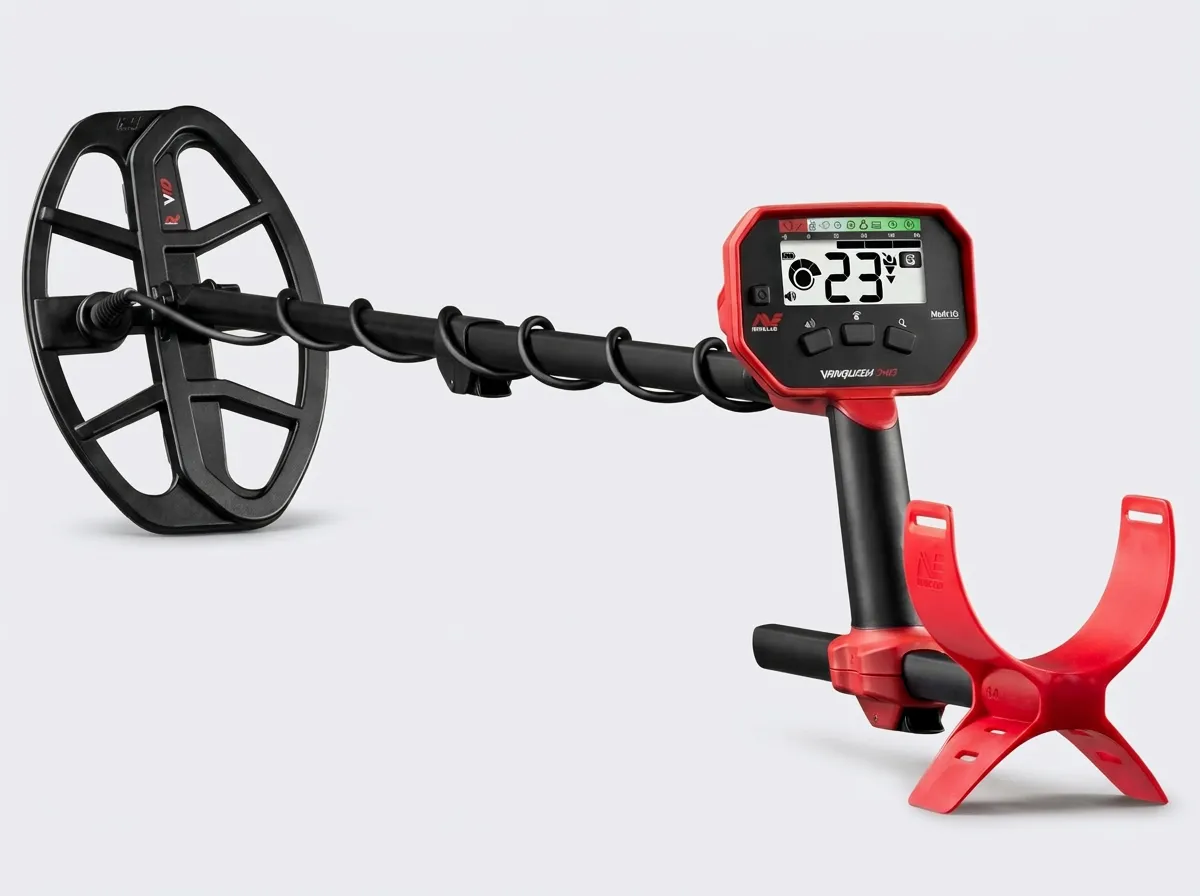
Minelab Vanquish 340
Availability checked on November 20, 2026. Prices change often: the button below shows today’s price and seller offers.
The short version
The Vanquish 340 is the simplest Multi-IQ detector Minelab sells. Three search modes, four sensitivity levels and three volume levels are the only real choices. It weighs 1.2 kg and collapses to about 76 cm, so it fits in a car boot or a hall cupboard. On paper, its Double-D coil and multi-frequency circuit suit the mixed ground UK beginners actually search. Owner feedback praises its build and ease of use; depth and sensitivity draw more mixed comments.
Best for: beginners who want set-and-forget detecting on parks, farmland permissions and dry beach sand, and anyone short on storage space.
Not for: anyone who wants a detailed 0–99 style target ID, a built-in pinpoint, manual settings for heavily mineralised soil, or a detector to take into the water.
Specifications
| Feature | Minelab Vanquish 340 |
|---|---|
| Technology | Multi-IQ (simultaneous multi-frequency) |
| Search coil | V10 10 × 7 in (25 × 18 cm) Double-D elliptical |
| Search modes | All Metal, Jewellery, Coin |
| Target ID | −19 to 0 ferrous, 1 to 40 non-ferrous |
| Discrimination | 5 segments, 3 tones |
| Sensitivity | 4 levels |
| Volume | 3 levels |
| Depth indicator | 4 levels |
| Ground balance | None to set (automatic, per Minelab's listing text) |
| Noise cancel | Automatic |
| Pinpoint | Not listed by Minelab |
| Waterproofing | Coil only, to 1 m |
| Display | Monochrome LCD, no backlight |
| Weight | 1.2 kg |
| Length | 145 cm extended, 76 cm collapsed |
| Power | 4 × AA alkaline, supplied |
| Headphones | Not included (3.5 mm socket) |
| Warranty | 3 years, control box and coil |
The Amazon.co.uk listing disagrees with Minelab in several places. Its feature text names the modes Park, Field and Beach, while Minelab's tech specs list All Metal, Jewellery and Coin. One spec row gives a single "5 kHz" operating frequency; the same listing says the detector uses five frequencies at once. It also shows an IP54 rating, an extended length of 33 cm and a non-adjustable shaft, none of which matches Minelab's figures. This review follows Minelab.
What its strengths are worth
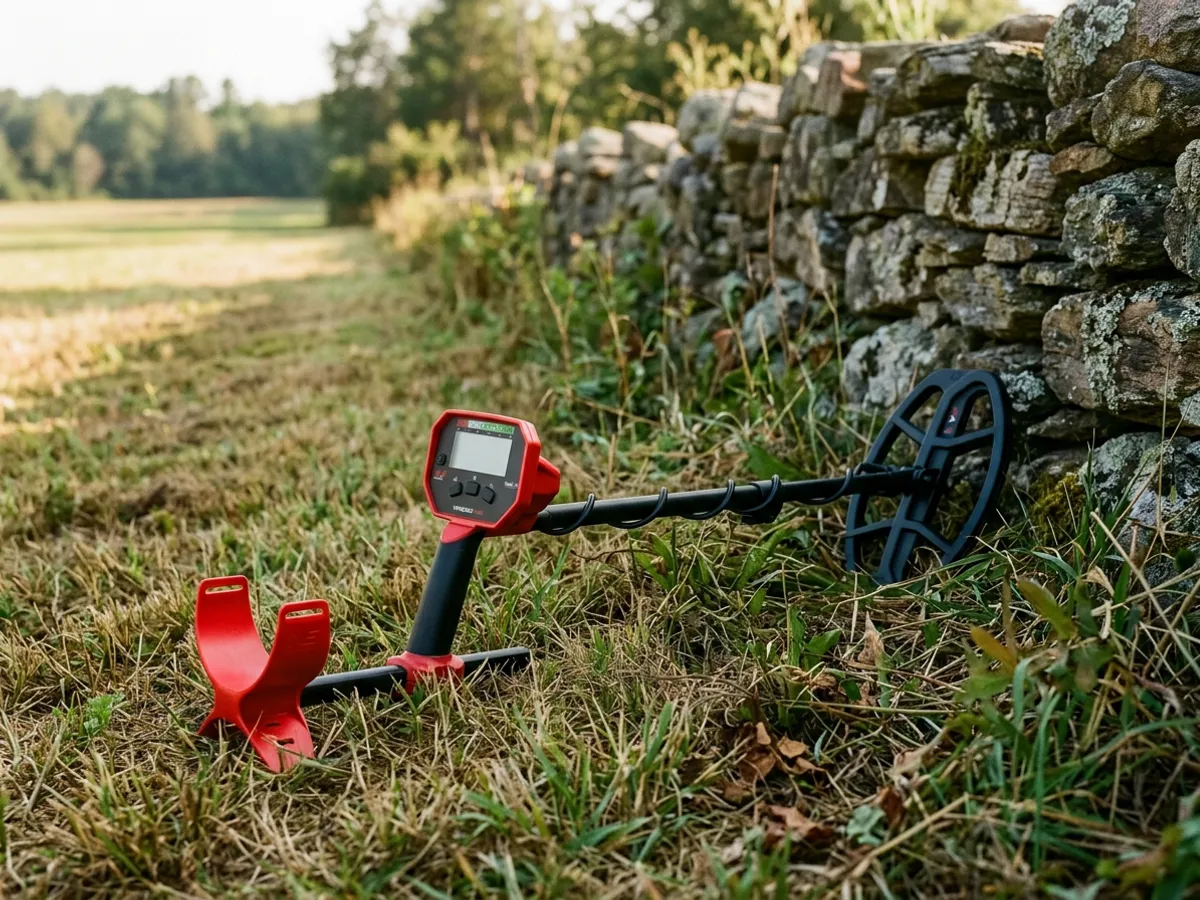
Multi-IQ without the jargon. A single-frequency detector makes a trade-off. Low frequencies favour large, conductive targets such as silver coins; higher ones favour small, low-conductivity targets such as thin gold. Wet salt sand and mineralised soil upset both. Minelab says Multi-IQ transmits several frequencies together and processes them as one, so the detector copes with changing ground without input from you. That is a manufacturer claim, and Minelab publishes neither the frequencies used nor depth figures. It remains the main reason to pick this model over a single-frequency machine in the same tier.
Nothing to ground balance. There is no ground balance control. For a beginner, that removes the step most likely to cause confusion on a new permission. For an experienced detectorist on very mineralised soil, it also removes a tool they may want.
Light and compact. At 1.2 kg, it sits at the light end of our UK comparison. The snap-lock shaft collapses to about 76 cm, which helps on a train or in a small car.
A Double-D coil that can get wet. The 10 × 7 in Double-D coil is waterproof to 1 m. Double-D coils are generally preferred on mineralised ground, and the elliptical shape works well between stones, roots and hedgerow edges. The control box is not waterproof: wet grass and puddles are fine, wading is not.
Simple discrimination. Five segments, three tones and a four-level depth indicator cover the basics. Minelab fixes the iron bias at High, which leans towards calling doubtful targets iron.
What is missing. The non-ferrous ID stops at 40, a much coarser scale than the 0–99 of the Garrett ACE 300 or the −19 to 99 of the Vanquish 360. More targets share each number, so a ring pull and a small ring can look alike. Minelab lists no pinpoint mode, so a handheld pinpointer is a sensible extra. There is no backlight, wireless audio or headphones in the box.
What owners say
Owner feedback on the Vanquish 340 comes mainly from Amazon's US store, where the listing has a long history; we did not find a separate UK trend. Build quality is the most frequently mentioned positive. Value and ease of use follow, then the light weight and the adjustable length.
The criticism is narrower. Depth and sensitivity draw mixed comments: several owners are satisfied, others expected more from a multi-frequency machine. A few buyers raise quality or value complaints. On the US store, Amazon has also flagged the listing as frequently returned. It does not say why, but the pattern fits buyers whose depth expectations were not met.
Our reading: the 340 is built for ease, not for maximum depth. If you want a detector that works without a manual, it fits. If you expect it to beat every single-frequency rival on depth, the feedback suggests caution.
Where it suits UK ground
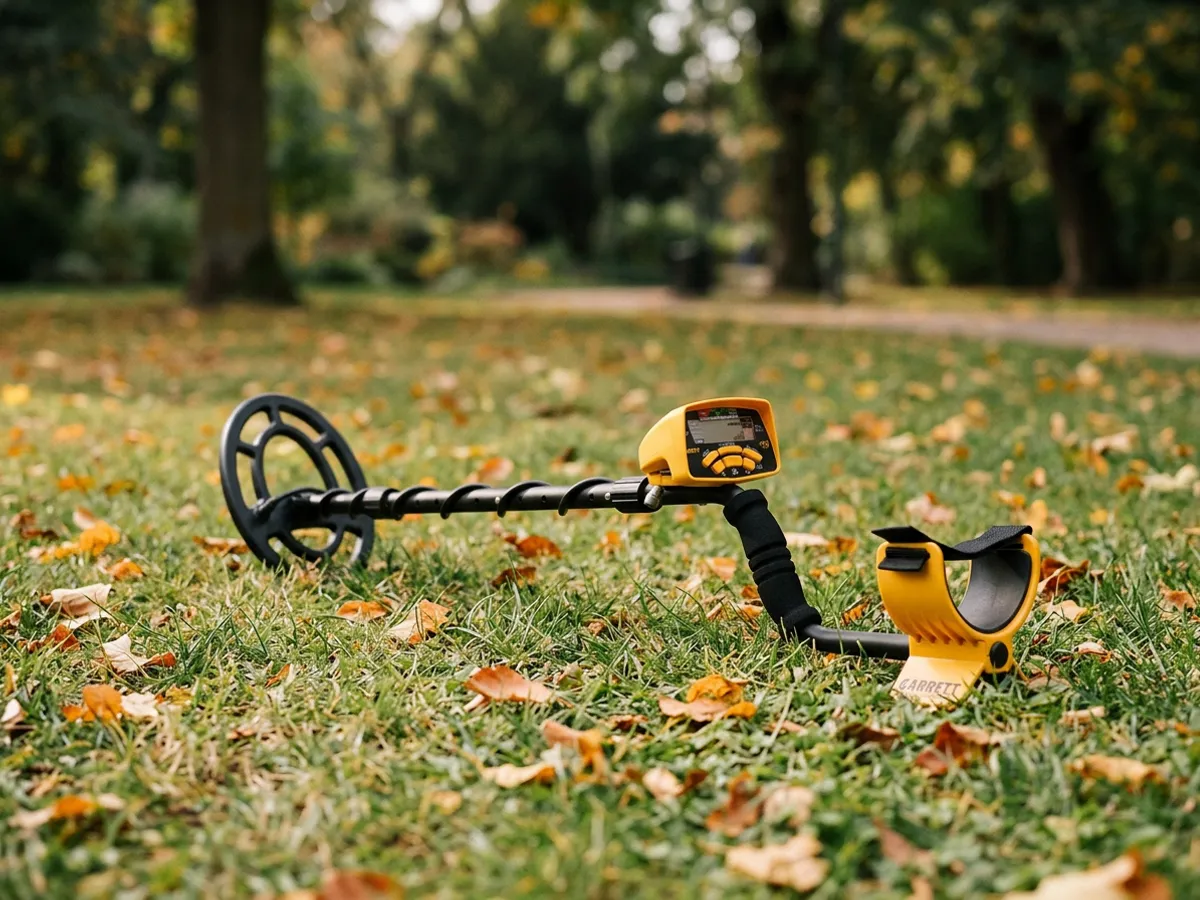
Parks and recreation grounds. Coin mode and automatic settings make quick work of lawns and playing fields. On rubbish-strewn sites, the coarse ID means more ring pulls and foil dug than with a 0–99 scale.
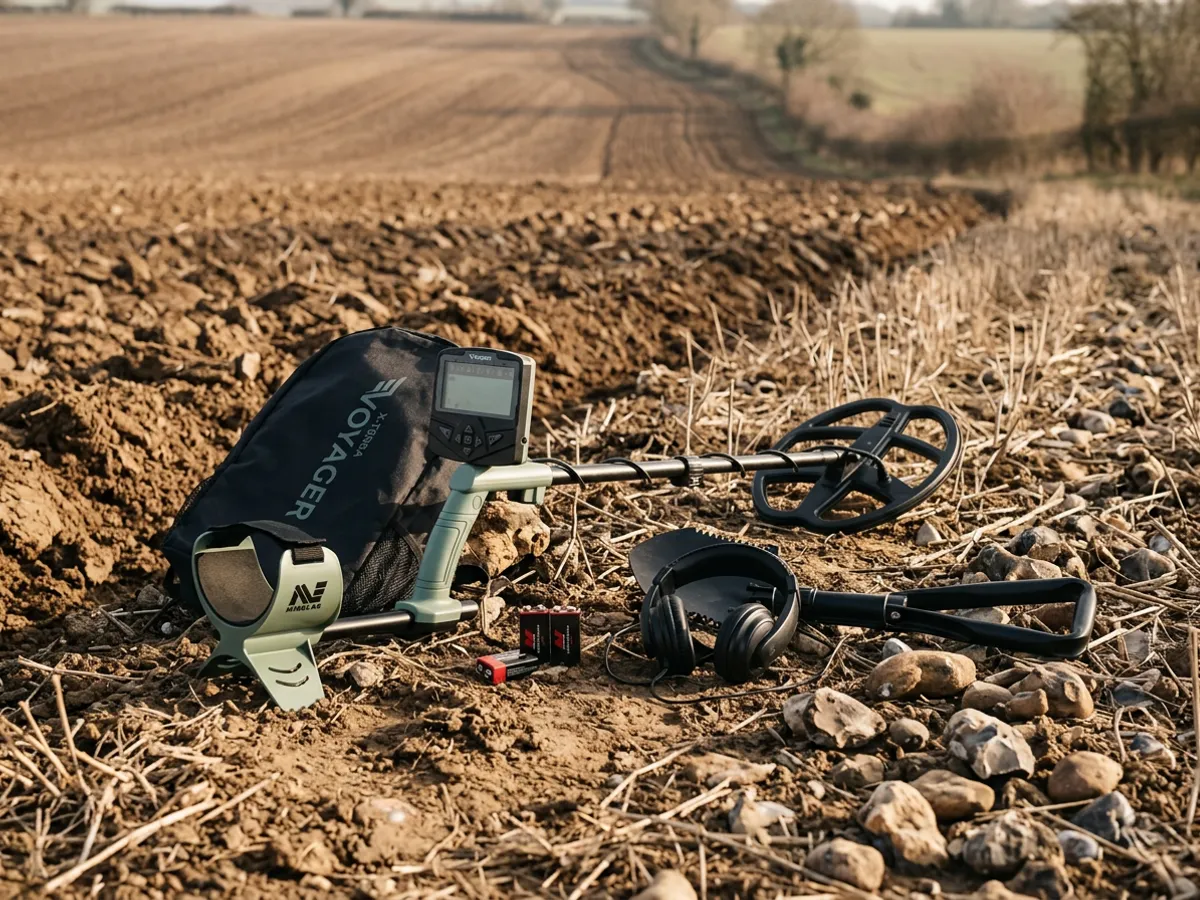
Ploughed fields and permissions. Mineralised farmland is where Multi-IQ and the Double-D coil should help most, according to Minelab, since there is nothing to rebalance as the soil changes. Iron-heavy fields are harder: with a coarse scale and fixed iron bias, expect to dig some nails.
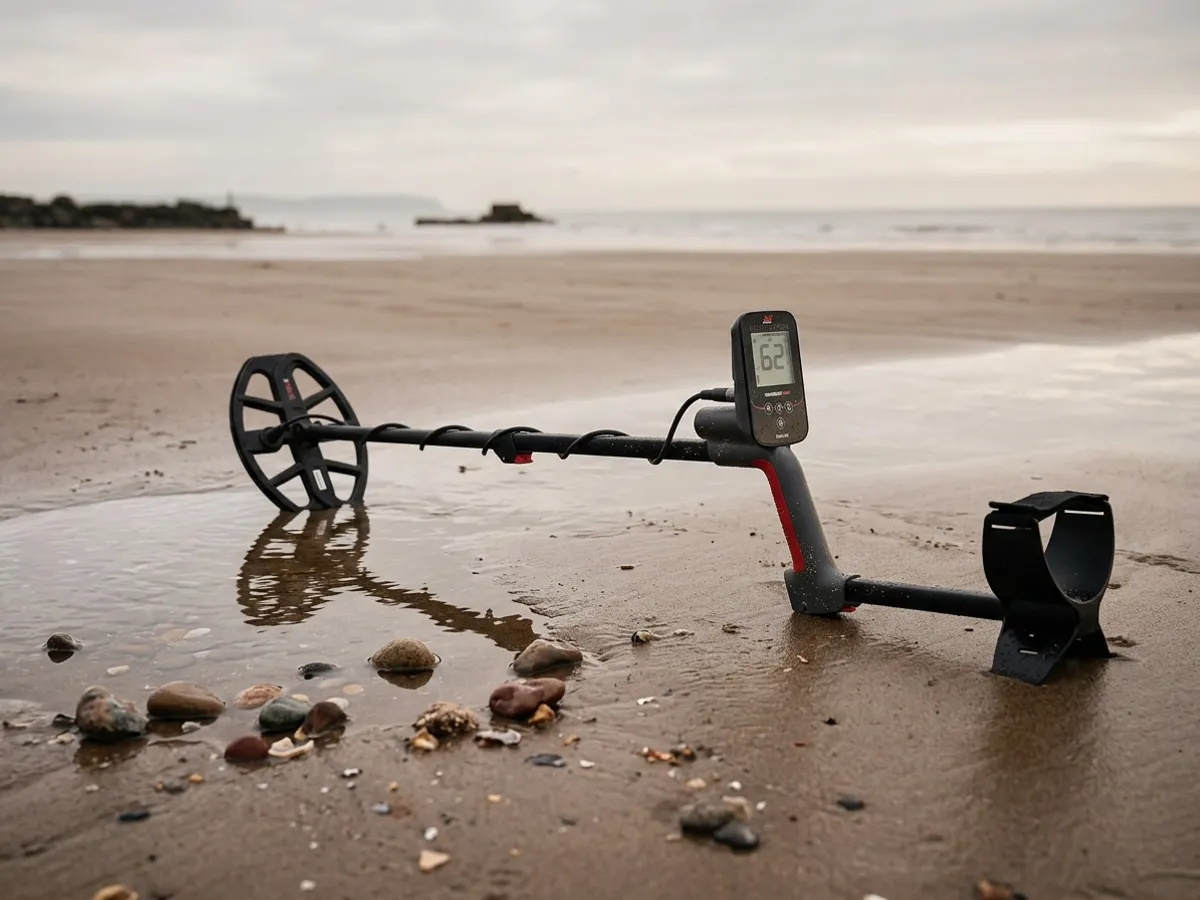
Beaches. Multi-frequency detectors generally handle wet salt sand better than single-frequency ones, and the coil can go under water to 1 m. The control box cannot, so stay on the sand and out of the surf.
Every site needs the landowner's permission, and finds may need reporting. Our UK metal detector guide summarises the Treasure Act and the Portable Antiquities Scheme.
Alternatives
- Minelab Vanquish 360: the same Multi-IQ idea, fully submersible to 5 m, with pinpoint and a −19 to 99 target ID, for regular beach and stream hunting.
- Garrett ACE 300: single frequency, but a finer 0–99 ID and a pinpoint mode, for park hunters who want more information on screen.
- Minelab X-Terra Voyager: a single-frequency starter kit with headphones, a digger and a backpack in the box.
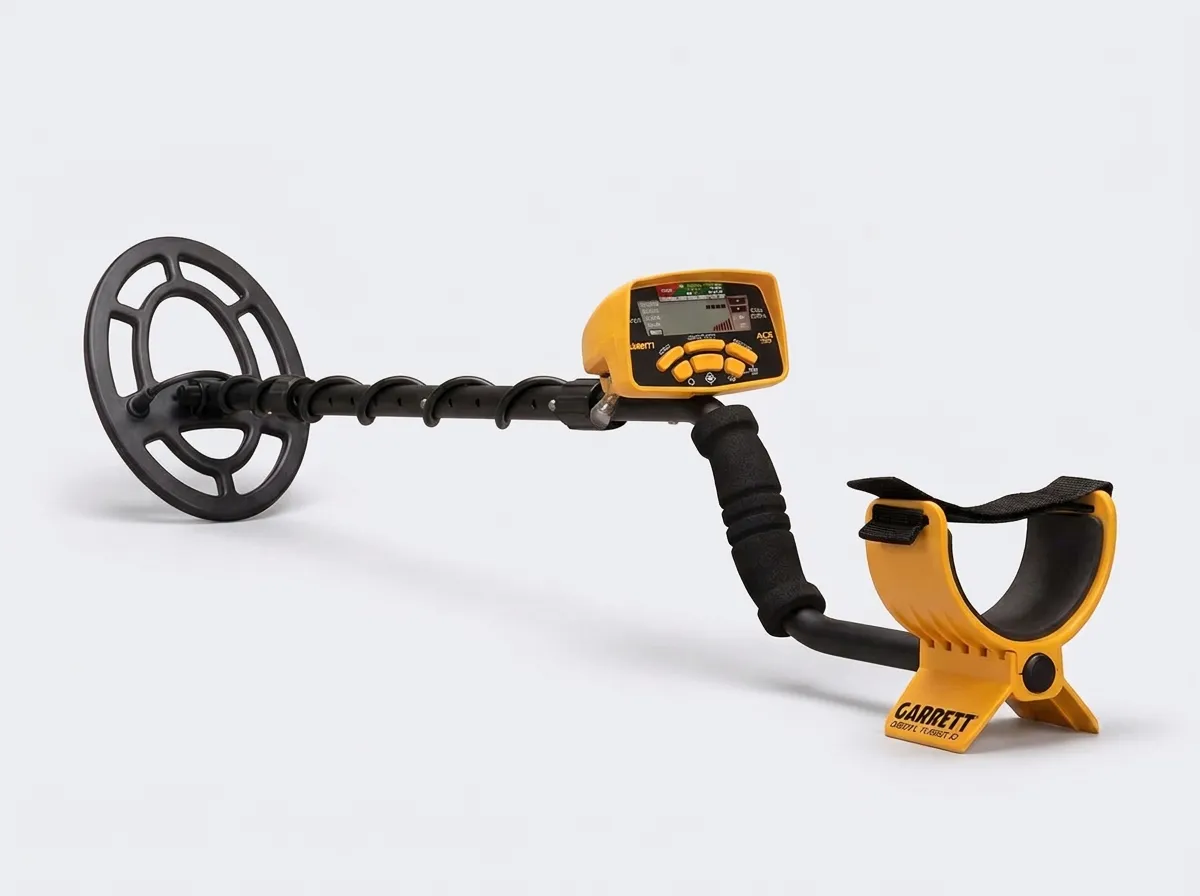
Garrett ACE 300
Availability checked on November 20, 2026. Prices change often: the button below shows today’s price and seller offers.
The whole Minelab range is compared on our Minelab page.
Frequently asked questions
Minelab's tech specs for the Vanquish 340 do not list one. You narrow down the target by sweeping the coil and listening for the strongest signal. Many detectorists add a handheld pinpointer to speed up recovery and keep holes small.
Minelab Vanquish 340
Availability checked on November 20, 2026. Prices change often: the button below shows today’s price and seller offers.

Our reviews are research summaries built from manufacturer documentation, published specs and owner feedback. We have not tested this product ourselves.
- Minelab Vanquish 340 tech specs (minelab.com)
- Minelab Vanquish 340 product page
- Amazon.co.uk product listing (model 3820-0001)
- Summary of owner feedback on Amazon listings